
Donec efficitur, ligula ut lacinia
viverra, lorem lacus.
Donec efficitur, ligula ut lacinia
viverra, lorem lacus.
Nobody predicted that the biggest conversation in digital photography this year would be about imperfection. After a decade of chasing sharpness, pushing megapixels past the point of useful, and smoothing faces until they look like rendered CGI — the industry is pulling back. Hard. And the pull isn’t coming from hobbyists rediscovering film. It’s coming from clients.
That’s the part worth paying attention to.

In January 2026, Aftershoot — an AI-assisted culling and editing company — published findings from interviews with professional wedding, portrait, and documentary photographers. Their conclusion: photography in 2026 is moving away from overly controlled, flawless imagery toward moments that feel raw, intimate, and real. Imperfection becomes a feature, not a flaw.
That framing matters because Aftershoot makes money selling AI polish tools. When a company like that reports the market moving toward less polished work, they’re reading actual client briefs — not theorizing.
What this looks like in practice: missed focus kept in final edits, visible grain left unsmoothed, motion blur treated as mood rather than mistake. Photographers across genres report a strong shift toward raw, emotionally charged photographs that feel lived-in rather than flawless. On stock platforms, the signal is equally clear — photo searches for “unfiltered” on Envato have increased by 11% in the past month alone.
This isn’t a minor aesthetic tweak. It’s a direct response to AI saturation. When generative tools can produce a technically flawless portrait of a person who doesn’t exist, in a studio that was never built, the market value of that technical flawlessness collapses. What AI cannot fake — at least convincingly — is a real person, in a real moment, with a real reaction nobody scripted.
That’s now the product.
“In 2026, AI doesn’t define the look of photography — it defines the efficiency of the workflow,” says Aftershoot. That’s the cleanest summary of where things actually stand. The tools are real. The timesaving is real. But the photographers treating AI-generated aesthetics as a signature style are increasingly finding that clients recognize it — and don’t like it.
The operational applications, though, are worth using without apology. Lightroom’s AI masking handles complex subject separation in seconds instead of minutes of pen-tool work. Aftershoot’s culling engine can process 800 images from a wedding down to a 150-image selection faster than any human on a second coffee. Tools like software-based neutral density simulation and AI noise reduction are now being integrated directly into camera systems by manufacturers like Canon and Sony — meaning the line between shooting and editing is blurring at the capture stage, not just in post.
The practical implication: turnaround expectations from clients have compressed. What was once a 3-week delivery window for a 500-image wedding gallery is now under pressure from clients who know what the tools can do. Build the AI-assisted workflow — not because it sounds modern, but because fighting it means working three times as hard for the same output.
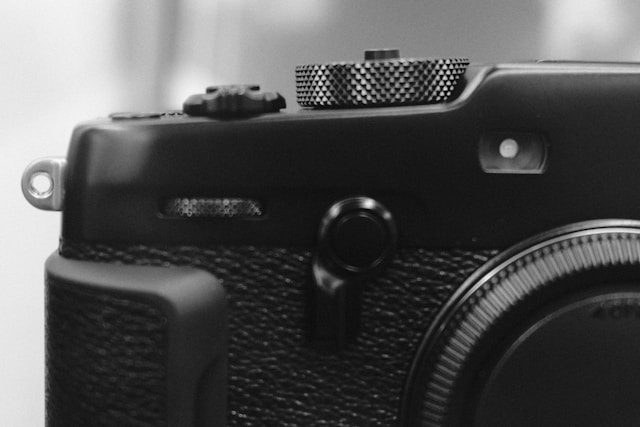
The defining hardware trend of 2026 is the continued adoption of C2PA (Content Credentials) signing in camera bodies beyond the flagship tier. Leica and Nikon have been early movers here, with Sony engaged in the broader Content Credentials ecosystem.
Here’s what C2PA actually does: it cryptographically embeds metadata at the moment of capture — who shot it, what camera, when, where — in a way that survives most post-processing. Think of it as a chain of custody for images. Photojournalism outlets, editorial clients, and commercial brands are starting to require it. Not as a preference. As a contractual clause.
Industries such as photojournalism and commercial photography are beginning to adopt formal guidelines and contractual requirements for AI usage, with cryptographic watermarking and metadata verification expected to play a critical role in maintaining trust in visual media.
If you’re shooting commercial or editorial work and your camera body doesn’t support Content Credentials, that’s a gear decision worth making before a client makes it for you. The Sony A9 III already supports it. Nikon’s Z8 and Z9 are in the ecosystem. Canon is moving. This one’s moving faster than most people expect.
The camera market in 2026 is increasingly bifurcated. On one end: flagship mirrorless bodies with on-sensor AI processing, sophisticated computational features, and hybrid video specs that blur the line between still camera and cinema tool. On the other: a strong resurgence of simple, affordable, even deliberately limited cameras that sell on tactility and intentionality.
The first major launches of 2026 include a 5MP retro camera and a compact that can’t shoot color — and both have waitlists. That’s not nostalgia. That’s a response to a specific fatigue with cameras that make every decision for you.
The hybrid shift is also impossible to ignore. Cameras in 2026 are designed as hybrid content creation tools, with manufacturers increasingly prioritizing video performance and hybrid workflows now standard — with photographers expected to produce both stills and motion content. If you’re a portrait or wedding photographer who still considers video optional, that positioning is narrowing your client list. The expectation of a short-form reel from a session — a 60-second vertical cut for Instagram, delivered alongside the gallery — is no longer a premium add-on for most markets. It’s table stakes.
Retro style is back with film grain, disposable camera effects, VHS overlays, and warm tones across digital platforms. That’s the surface layer, and it’s easy to dismiss as a trend cycle. But underneath it is something more durable: clients want images that don’t look like they were made by software.
The irony is that the most credible way to achieve a film look in a digital workflow still requires shooting film — or at least understanding what you’re simulating. The photographers producing the most convincing analog-aesthetic digital work are the ones who have actually loaded a roll of Kodak Portra 400 and understand how the latitude behaves in mixed light. You can’t fake grain convincingly if you’ve never studied what grain actually does to shadow separation.
For deeper texture, exploring analog workflows with film or point-and-shoot cameras, or utilizing digital presets that emulate vintage processes, aligns with current photography trends and adds character and mood to the work. Capture One’s film simulations and Adobe’s grain profiles have gotten genuinely good — but they’re tools, not replacements for understanding the source material.
The vertical aspect ratio of 9:16 is now commonly used on TikTok, Instagram Reels, and YouTube Shorts, and mobile platforms have become the most popular destination for visual content.
This is where a lot of photographers trained in horizontal composition are losing clients without understanding why. The issue isn’t aesthetics — it’s that a gorgeous 3:2 horizontal image delivers zero usable content for the platform where a client’s audience actually lives. Shooting with vertical crops in mind, leaving headroom, managing negative space for text overlays — these are composition decisions that happen before you press the shutter, not in Lightroom afterward.
The practical adjustment: on any shoot where the client has a social presence, deliver a 9:16 version alongside the standard selects. Not cropped aggressively after the fact. Composed for it during capture. Clients notice the difference. Most of them can’t articulate why one feels right and the other feels like it was trimmed from something else — but they feel it.

Portrait photographer Esther Kay summarizes the shift clearly: “Portraits aren’t just portraits anymore — they’re identity. Entrepreneurs, creators, and professionals want branding imagery that tells a story and defines their visual voice.”
The client coming in for headshots in 2026 is not the same client who came in for headshots in 2019. They understand personal brand. They have a content calendar. They know they need variety — not three poses against a white wall, but a set of images that cover their speaking engagements, their newsletter header, their LinkedIn banner, and their podcast thumbnail simultaneously. One shoot, multiple outputs, each framed for a specific context.
Networks are no longer showcases — they’re speakers. People want to know who you are, how you talk, how you feel. The personal brand isn’t the logo — it’s you.
That changes the photographer’s role. You’re not just operating a camera. You’re helping someone translate their professional identity into a visual language they don’t have the vocabulary to describe themselves. That’s a harder job. It also pays better.
Digital photography in 2026 isn’t one thing. It’s multiple competing forces running in parallel: AI efficiency tools alongside a market rebellion against AI aesthetics, higher sensor specs alongside intentional technical limitation, global platform standardization on vertical formats alongside a return to analog grain. The photographers navigating this well are the ones who aren’t waiting to see which trend “wins.” They’re reading client work, staying fluent in both the tools and the emotional language of images, and making deliberate choices rather than chasing software release cycles.
The camera doesn’t care which direction the market is moving. You do.
Should I invest in a C2PA-compatible camera body now, or wait for broader adoption?
If you’re shooting editorial, photojournalism, or commercial work for international brands — act now. The adoption curve for C2PA in professional workflows is moving faster than it did for mirrorless, and several major wire services and editorial outlets are already building it into licensing requirements. If your current body is a Sony A9 III, Nikon Z8/Z9, or recent Leica — you’re covered. If you’re on Canon, watch the next major body announcement closely; they’re in the Content Credentials ecosystem and implementation is expected at a non-flagship price point before year-end 2026.
How do I price the AI-assisted workflow gains without undervaluing my work?
Don’t pass the time savings to the client as a lower rate — pass them as faster delivery and more consistent quality. The value was never “hours spent culling 2,000 images.” The value was the final 80 images that tell the story. AI culling gets you to that selection faster; it doesn’t change what those 80 images are worth. If anything, tighter turnaround is a premium justification, not a discount trigger. Adjust your packages to lead with delivery time as a differentiator.
How do I approach the film-look trend without it looking like a cheap Lightroom preset?
Shoot intentionally for the aesthetic rather than applying it in post. That means metering for shadow detail the way film requires — not blowing out highlights to recover later — and thinking about tonal range at capture, not in sliders. If you’re simulating Kodak Portra 400 behavior, understand that Portra compresses highlights and renders warm skin tones because of how its emulsion layers respond to light — not just because of an orange shift in the color grading. Study the source, then simulate it. The difference between a preset and an aesthetic is whether the person applying it understands what they’re imitating.
My clients keep asking for “authentic” images but rejecting candid shots in the final selection. What’s actually going on?
They want the feeling of authenticity, not the visual mess of it. That’s a real distinction. Candid shots that read as authentic require the subject to be genuinely at ease — which means the setup, the conversation, the pace of the shoot, and the lighting all have to feel low-pressure enough that real expressions happen. When a client rejects candid shots in selects, they’re usually rejecting awkward transitions, unflattering angles, or moments that feel private rather than natural. The fix isn’t to shoot less candidly — it’s to create the conditions where genuine moments coincide with good light and intentional framing. That’s the actual skill.
