
Donec efficitur, ligula ut lacinia
viverra, lorem lacus.
Donec efficitur, ligula ut lacinia
viverra, lorem lacus.
Most families book a photo session once a year, maybe twice. That’s not a lot of chances to get it right. And yet, plenty of those sessions end up producing stiff, forgettable images — everyone lined up, nobody smiling naturally, the dog looking away. Here’s what actually makes the difference between a photo that lives on the wall and one that gets buried in a folder.
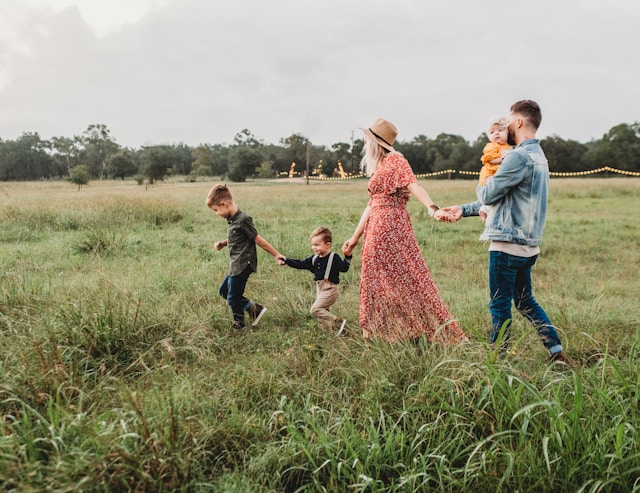
Family photography is the genre of photography dedicated to documenting relationships — parents, children, siblings, grandparents, sometimes pets. It sounds straightforward, but it’s one of the more technically and emotionally demanding areas to work in. You’re not shooting a controlled still life. You’re managing movement, emotion, and light all at once, usually on a tight schedule.
What separates a good family photoshoot from a mediocre one isn’t just technical skill. It’s the ability to help people feel comfortable in front of the camera — and that’s a skill photographers develop over years, not weekends.
Choosing a style before a session isn’t just an aesthetic decision. It determines how you prepare, what location you pick, and how you direct (or don’t direct) your clients. Here are the four main approaches:
This style is about observation, not orchestration. The photographer documents everyday life as it unfolds — breakfast, bedtime routines, a Saturday morning at home. No posing, no direction. The entire day might be covered. The result feels raw and honest, which is exactly the point. It’s harder than it looks; capturing candid moments with good light and composition requires serious anticipation.
The more traditional approach. The photographer provides a lot of direction — where to stand, where to look, how to angle the chin. Formal portraits, holiday cards, and multi-generational family photos usually fall here. Clients who aren’t confident in front of the camera often prefer this because the guidance removes the guesswork for them.
Lifestyle photography sits between documentary and posed. There’s direction, but it’s loose — more “play with your kids on this blanket” than “stand here and smile.” Lifestyle family sessions feel usually more relaxed, and the images reflect that. This has become the most requested style among younger families in 2025–2026, largely because the images look natural on social media without being entirely unplanned.
Studio photography gives you total control over light. No golden hour to chase, no weather to worry about. The tradeoff is that the environment is artificial, and some families — especially those with young children — find it stiff. A good studio photographer knows how to break that tension fast.
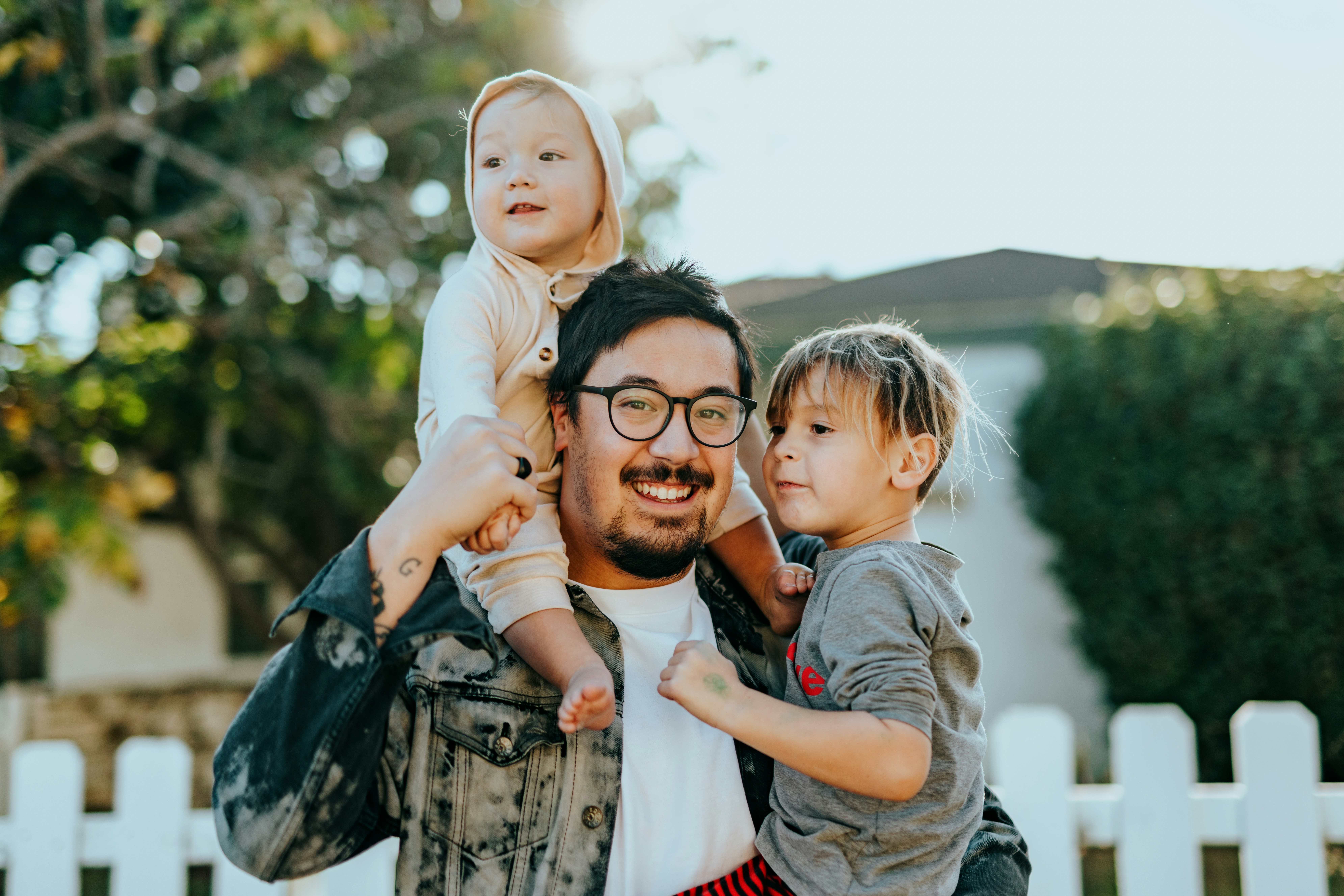
Source: Unsplash
Preparation is where most sessions are won or lost — before anyone picks up a camera.
You don’t need a bag full of gear. What you do need:
A lot of photographers default to the zoom for flexibility and use the 85mm when they want depth and a more intimate feel. That’s a reliable approach. The lens choice affects the mood of the image more than most clients realize.
Kids move. A lot. Shutter speed is your first priority — anything below 1/250s and you’re gambling on blur. In good outdoor light, shoot at 1/500s or faster. Push your ISO before you drop below that threshold. Modern sensors handle ISO 3200 cleanly enough that noise is rarely the bigger problem.
For aperture: f/2.8 looks beautiful on a single portrait, but the moment you have four people at slightly different distances, focus falloff becomes an issue. f/4 to f/5.6 is usually the practical sweet spot for group shots.
The location should mean something to the family whenever possible. Their backyard, a favorite park, the beach they visit every summer. Familiar surroundings help people relax — and relaxed people photograph better. Generic locations produce generic images.
Practically speaking, look for locations with:
Sunrise and sunset give you the best natural light. Sunset is more popular because families aren’t waking up at 5am. That’s just the reality.
Coordinate, don’t match. Identical outfits look dated. The goal is a cohesive color palette — three or four complementary tones — where everyone looks like they belong in the same photograph. Avoid loud patterns and bright logos. Solid colors, muted tones, and simple textures hold up better in print and on screen.
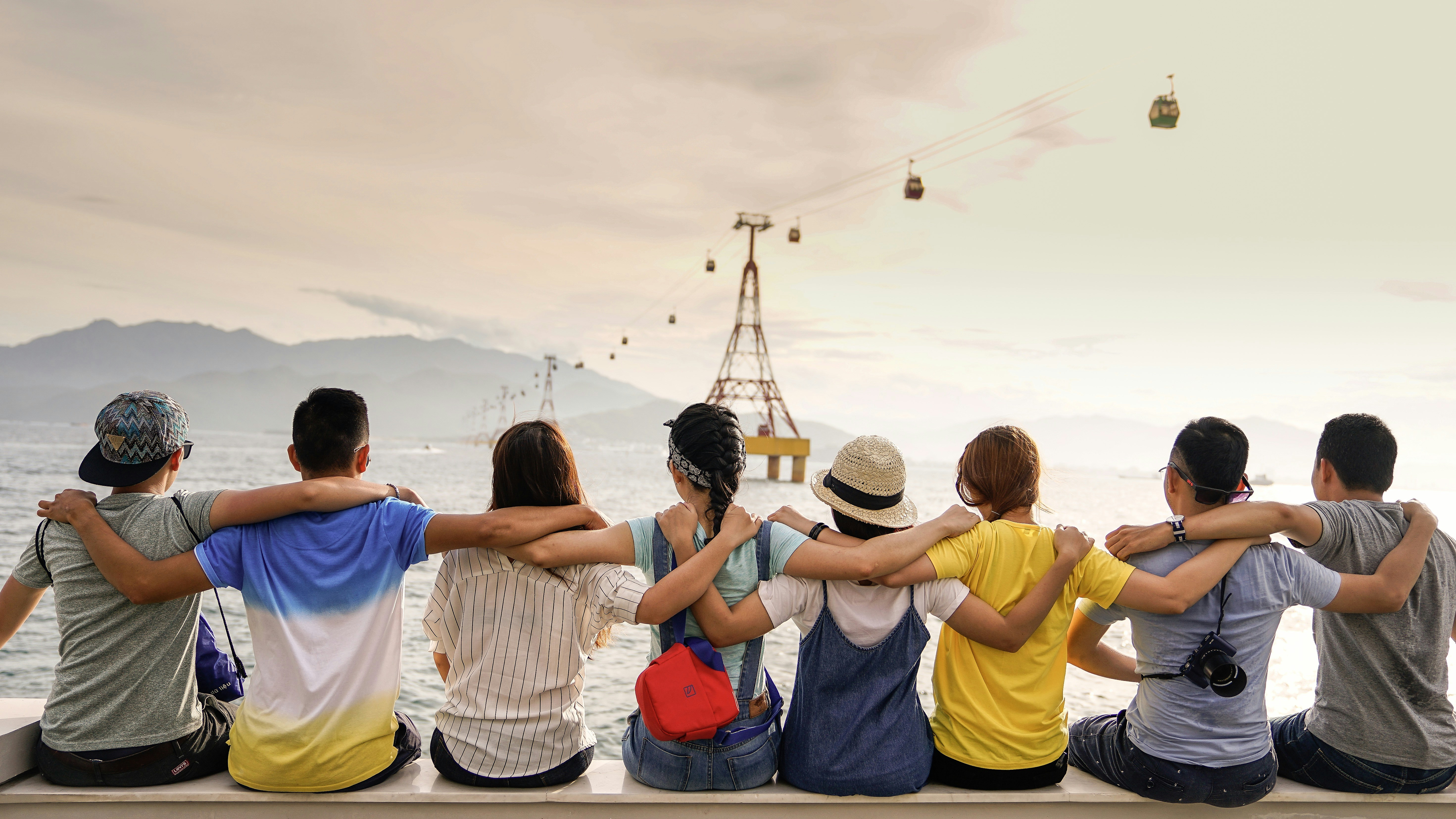
Source: Unsplash
The single best thing you can do before a session: get to know the family. A 10-minute conversation before you pick up the camera changes everything. When people feel comfortable with the photographer, the images reflect it. Cold introductions produce stiff shoulders and forced smiles.
During the session:
Posing doesn’t mean rigid. Think of it as arranging connection — not bodies. A parent lifting a child, siblings whispering something, everyone looking at the youngest one. The neck and chin angle matters more than people think; a slightly forward and down chin position almost universally flatters in portraits. Worth mentioning to clients who look uncomfortable.
For women specifically, body angle makes a significant difference. A slight turn — never squared directly to camera — creates more dimension and feels more natural. Check out photo poses for women for a practical breakdown of what works and why.
Pets are unpredictable, which is part of what makes those images feel alive. Schedule pet time early in the session before they get tired or overstimulated. Have the owner handle the animal — don’t try to manage both the camera and a dog who just spotted a squirrel. And accept that some of the best frames will be chaotic. That’s fine. That’s real.
If you’re working with newborns alongside older siblings, preparation matters even more. The dynamics shift completely. Infant photography requires its own set of considerations around safety, timing, and temperature — worth studying before your first session with a newborn.
Editing is where you establish a consistent style — the visual tone that makes your portfolio immediately recognizable. Good post-processing doesn’t save a bad photograph. But it can elevate a good one significantly.
High exposure, lifted shadows, cool or neutral tones. Works especially well in outdoor sessions with soft natural light. The most requested style in lifestyle family photography right now.
Crushed blacks, rich shadows, often warmer mid-tones. Creates a cinematic mood that works well in documentary and lifestyle work. Harder to pull off with harsh light sources.
Lifted blacks, faded highlights, desaturated colors. The matte look softens contrast and gives images an analogue feel. Very forgiving of imperfect light conditions.
Black and white strips away the distraction of color and forces the viewer to focus on expression and composition. Powerful for emotional portraits. Use it selectively — not every image benefits from it.
Punchy saturation, strong contrast, vivid primaries. Less common in family work but effective for outdoor summer sessions with kids. Needs careful control to avoid looking oversaturated.
Presets — saved edit configurations applied across a batch of images — are the practical backbone of a professional editing workflow. A single session can produce 300–600 images. Editing each one manually isn’t sustainable.
The key is applying presets as a starting point, not a final answer. Every session has different light conditions, different skin tones, different environments. A preset gets you 70–80% of the way there; the remaining work is fine-tuning individual images. Skipping that last step is where consistency breaks down.
For photographers looking to streamline their editing without sacrificing quality, Luminar Neo offers AI-assisted tools specifically designed for photo editing workflows — including portrait retouching, sky replacement, and preset management. Worth exploring if editing is eating too much of your post-session time.

Source: Unsplash
Style isn’t something you choose from a menu. It develops through repetition — shooting a lot, editing consistently, and being honest about what you’re actually producing versus what you think you’re producing. Look at your last 20 sessions. What do they have in common? That’s your current style, whether you’ve named it or not.
From there, the work is refinement. Pick the photographers whose work you admire and reverse-engineer why it works. Is it the light? The moment they chose to capture? The editing tone? Understanding the mechanism matters more than copying the surface.
Every family is different. Every session brings new variables — a reluctant teenager, a toddler who’s skipped a nap, rain that wasn’t in the forecast. Rigid photographers struggle with this. Adaptable ones build a portfolio that looks like it was made with intention. That’s the goal: images that feel inevitable, even when the session was anything but.
