
Donec efficitur, ligula ut lacinia
viverra, lorem lacus.
Donec efficitur, ligula ut lacinia
viverra, lorem lacus.
Something shifted in the headshot market this year, and it’s not subtle. After two years of AI headshot generators flooding LinkedIn with plasticky, symmetrical portraits that look like they were rendered in a video game engine, the backlash has arrived. Clients are walking into studios specifically because they don’t want the AI version. They’ve seen it. They know what it looks like. And they’re paying real money to not have it.
That’s actually good news for working photographers — but only if the work you deliver is worth the distinction.
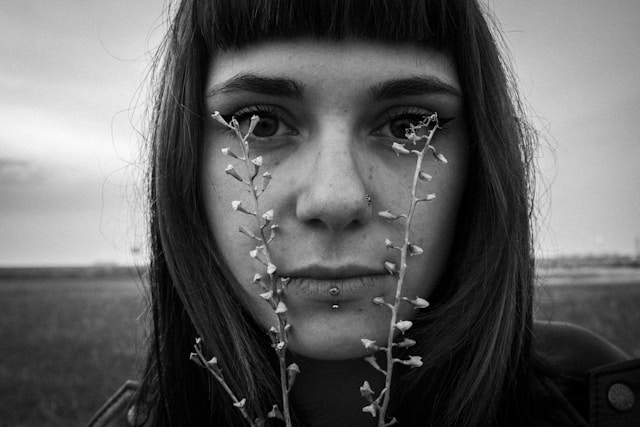
A ZipRecruiter expert quoted by CNBC was direct: “A poorly done AI headshot is easy to spot, signals a lack of authenticity, and can actively hurt a candidate’s chances.” That assessment is penetrating client thinking in ways that create real appointment bookings. The backlash isn’t abstract sentiment — it’s converting into sessions.
Here’s the paradox you need to understand before you position your business around it. A 2022 study in the Proceedings of the National Academy of Sciences found that AI-generated faces are rated 7.7% more trustworthy than real faces — when people don’t know the photo is AI. But once people learn a headshot is AI-generated, about two-thirds of recruiters said they’d be put off. Same image. Same quality. Completely different reaction the moment the label changes.
That’s the vulnerability in the AI headshot market. It works only while nobody notices. And people are noticing more. An AI headshot signals low effort. It tells the viewer that you are a low-effort, path-of-least-resistance person. That judgment may be unfair in individual cases, but it’s the judgment happening in real hiring decisions and client vetting processes right now.
Your job as a headshot photographer in 2026 is to produce work that is visibly, undeniably real — and to communicate that clearly enough that potential clients understand the distinction before they start comparing prices with a $29 AI generator.
The 2026 trend is the Confident Neutral — an expression that says you’re focused, approachable, and actually present in the room. It’s about a relaxed jaw and engaged eyes, the kind of subtle micro-expressions that AI still can’t quite get right.
Getting that expression on camera is the job. Not the lighting setup, not the lens choice — those are prerequisites. The real work is the 20 minutes before the first usable frame, when you’re talking a nervous 47-year-old attorney out of the rigid corporate performance face they’ve worn to every photo in their life. If you can’t do that, your Sony A7R V and your Profoto B10 are just expensive props.
The technical decisions matter too, though. Not abstractly — specifically. Polished, not plastic: remove temporary distractions — flyaways, lint, minor blemishes — even skin tone gently, and keep texture. Over-retouching creates wax skin, erased pores, over-whitened eyes, and will date your image fast. The photographer who understands this distinction is delivering something the client can’t get from Facetune. The one who doesn’t is competing with tools that cost $29.
For exposure, start at f/2.8 for environmental context frames and open to f/1.8 on a 85mm when you want background separation that reads as intentional rather than just shallow. On a full-frame body, f/1.8 at 85mm produces a background blur that’s clean and cinematic without the focus-plane nervousness of f/1.4, where blinking shifts which eye is sharp. ISO 400–800 keeps skin texture visible under studio flash without introducing luminance noise that reads as digital grain in the midtones.
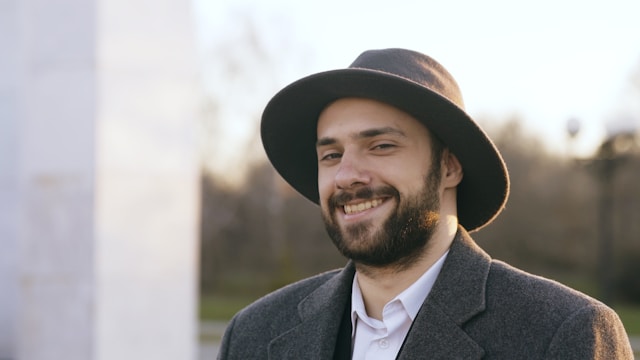
Grey seamless is not dead — it still works, particularly for corporate teams where visual consistency across 40 employees matters more than individual expression. But for executives, founders, and professionals who are the face of their own brand, backgrounds are leaning toward deep charcoals, near-blacks, and warm off-whites. These shades simplify the frame and direct attention to the eyes. The generic office-looking studio is being replaced by real spaces — textured walls, modern lobbies, actual working environments.
The cause-and-effect here is worth understanding. A dark background compresses the tonal range around the subject’s face. With a well-lit subject against near-black, every tonal stop of separation between the background and the shadow side of the face becomes visible — giving you perceived depth and dimensionality without any physical depth in the set. It’s why the same face looks flat against a mid-grey and three-dimensional against charcoal, even with identical lighting.
For physicians and attorneys, environmental headshots incorporate real working environments. For creative entrepreneurs, it’s their studio space or tools of their trade. The key is subtlety — the environment enhances rather than distracts, keeping focus on the person while providing meaningful context.
Location headshots require one thing the studio doesn’t: light control at a place you don’t own. A 60×90cm collapsible softbox on a battery-powered strobe — the Godox AD300 Pro is the workhorse option at this price point — lets you overpower ambient office lighting enough to establish a consistent look across different positions in the space. Without that control, you’re at the mercy of whatever the fluorescent ceiling fixtures are doing, which is usually mixed color temperature at the wrong angle for a portrait.
A great headshot in 2026 has to work across multiple digital contexts: LinkedIn profile photo as a square crop, website bio as a wide crop, email signature small, and video call background matching.
Tight shoulders-up framing — the traditional headshot crop — fails to support this range. A portrait that shows nothing below the shoulders can’t be adapted for a website hero banner that needs negative space for text overlay. It can’t be cropped horizontal for a keynote bio slide. This is where the session structure has changed most visibly. Shooting at three focal lengths within the same session — 85mm tight for the traditional LinkedIn use, 50mm for waist-up frames with environmental context, and a 35mm wide that shows the full setting — gives clients a deliverable set that works across all their platforms without a second session.
Headshots are no longer just for LinkedIn. They’re used in proposals, websites, slides, and even on billboards. A tight shoulders-up crop doesn’t work across all formats. That’s why modern professional headshots often include waist-up or three-quarter framing to provide more flexibility.
Frame horizontal variants intentionally during capture. Negative space to the left or right of the subject, clean background extending well past the shoulder — these are compositional decisions made at the shoot, not salvaged in Photoshop afterward. Trying to expand a tight portrait in post using AI generative fill to create background that wasn’t there produces results that look exactly like what they are.
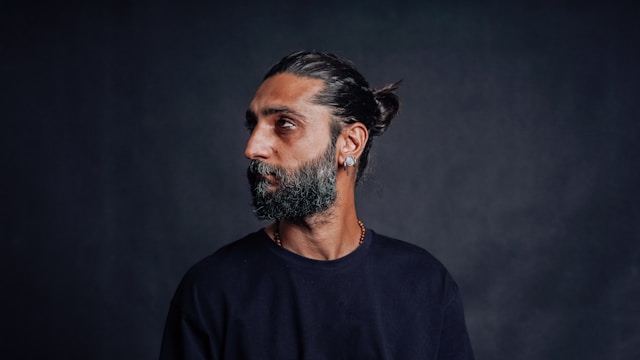
Corporate team headshots are where the business model differs most sharply from individual sessions. A law firm needs 22 portraits in three hours. Consistent lighting across all of them, immediate tethered review so the partners can approve selects on-site, and turnaround measured in days rather than weeks.
The setup that handles volume without sacrificing consistency: one fixed lighting position — key light at 45 degrees through a 90cm octabox, reflector on the opposite side set at roughly half the ambient level — and a fixed camera position tethered to a laptop running Lightroom. No repositioning between subjects. The variation comes from the person, not the setup. A consistent background placement mark on the floor keeps subjects at the same distance and angle every time, which means your exposure and depth of field stay identical across 22 subjects. That consistency is what makes the team page on their website look like a professional decision rather than a collection of different photographers’ work.
Organizations investing in team headshots are prioritizing visual cohesion — not cookie-cutter sameness, but consistent lighting, background tone, and image style so the entire team looks unified across website, LinkedIn, and marketing materials. Inconsistent team photos signal disorganization.
Turnaround is a competitive differentiator here. Corporate headshot photographers are surprisingly efficient. In most cases, retouched images can be delivered the next day, if not sooner. If your post-processing workflow can’t support next-business-day delivery on a 20-person team shoot, you’re losing corporate clients to photographers who have solved the workflow problem with better batch editing systems.
Every photographer can set up a key light at 45 degrees. The image that actually gets used on a company website for three years is the one where the subject looks like they’re in the middle of a conversation they’re interested in — not performing “professional” for a lens.
The stiff, shoulders-back, neutral-face headshot is on its way out. In 2026, photographers are working harder to capture subjects in a more natural state — mid-laugh, mid-conversation, slightly turned, visibly at ease. Relaxed posing extends to body language: slight leans, crossed arms done right, natural hand placement. The overall effect is approachability without sacrificing authority.
The technique that works: give subjects something to react to instead of something to hold. Instead of “look natural,” say “tell me what you’re working on right now.” The energy shifts in about four seconds. Their eyes engage because they’re actually thinking about something they care about, and you fire during that window. Three usable frames from a 90-second conversation beat 40 frames of someone trying to smile on command. Every time.
An eye-tracking study published in i-Perception showed that people subconsciously spend more time viewing images they believe are human-made — even when they can’t consciously identify which is AI. We’re wired to sense the difference, even when we can’t articulate it.
That perceptual reality is the argument for everything you do in a real session that no generator can replicate. The expression isn’t chosen from a batch of outputs. It happened in real time, in front of a real person with a camera, and the person in the frame was actually present for it. That’s not a marketing claim. It’s the physics of how the image was made.
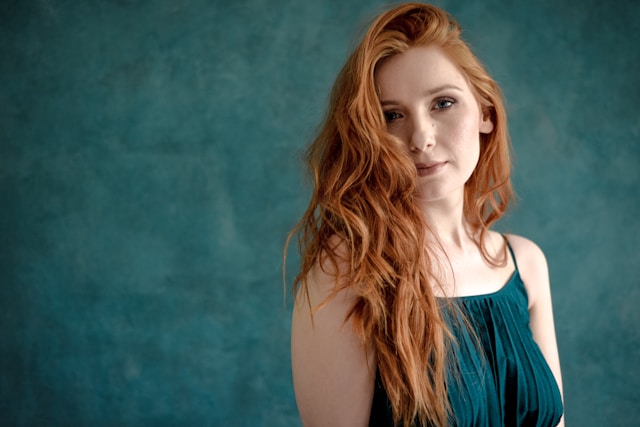
How do I price against AI headshot generators without getting into a race to the bottom?
Stop competing on price and start competing on the problem AI creates. Tools like HeadshotPro and Aragon AI generate images for $29–$59. You can’t win that comparison on cost — so don’t try. Instead, anchor your positioning on the Zoom problem: when a client’s AI headshot bears only a passing resemblance to what they actually look like on a video call, the trust deficit that creates is real and professionally damaging. The gap between the AI image and what you actually look like on a Zoom call creates a trust problem that most people underestimate. Frame your session price — which should realistically sit between $300 and $600 for individuals and scale down to $80–$150 per person for corporate teams — as insurance against that gap, not as a luxury alternative to a cheaper option.
Should I offer virtual headshot sessions? Is the quality comparable to in-studio work?
Virtual headshot sessions — where a photographer directs a client via video call while they shoot in their own space — are gaining serious traction for corporate teams spread across multiple locations. The technical floor is lower than studio work: you can’t control their light source or lens choice. But with pre-session prep (sending lighting kits or detailed instructions for positioning a ring light or window light), directing remotely during capture, and strong retouching afterward, the results satisfy most corporate use cases. Virtual headshots with a live photographer represent the model that has replaced traditional photo days for most enterprise teams — real photos, real direction, done in 10 minutes from anywhere, delivered in 24 hours. For individuals who want full creative control and expression coaching, in-person studio sessions remain superior. The business argument for offering virtual is reach: it removes geography as a barrier for corporate clients with distributed teams.
My corporate clients want all team members’ headshots to look consistent, but different people photograph very differently. How do I handle this technically?
Fix everything you can fix. Lock your lighting setup — same modifier, same distance, same angle — and use a floor mark so every subject stands at the same distance from camera. Set your exposure in manual mode and don’t touch it between subjects. Shoot tethered to a calibrated monitor, which lets you catch any drift in real time rather than discovering it in post. The variables you can’t control are each person’s face, skin tone, and clothing. Handle skin tones at the retouching stage using a consistent color grading approach rather than treating each portrait individually. For clothing inconsistency — which is inevitable when people dress themselves — a muted background that doesn’t interact strongly with color makes the variation less jarring. The goal is that the team page looks like one photographer shot it over one morning, not that every person looks identical.
How often should I recommend clients update their headshots, and how do I make that a recurring revenue stream without being pushy?
A good working rule in 2026: update your headshot every two to three years, or whenever there’s a significant change in appearance or professional identity — including a notable change in hair, a significant role change, or a major personal shift. Build this into your client communication without making it feel like a sales pitch. The simplest version: a follow-up email 18 months after the session, asking whether their current headshot still reflects where they are professionally. Most will have changed jobs, grown a beard, cut their hair, or moved into a different role. Many will book again without needing much persuasion — because the question itself surfaces the gap between who they were in that photo and who they are now. Don’t discount returning clients as a loyalty gesture. Returning clients cost less to acquire than new ones, and they refer people. Price their return sessions at the same rate and deliver the same level of attention, and they’ll bring their colleagues.
