
Donec efficitur, ligula ut lacinia
viverra, lorem lacus.
Donec efficitur, ligula ut lacinia
viverra, lorem lacus.
Most people’s pet photos are taken from standing height, looking down, while the dog looks back up at them. The dog’s body looks compressed, the head looks oversized, and the background is the living room floor. It’s documentary, not photography. The fix is one movement: get on the floor.
Eye-level with the animal is the single most transformative change you can make. Everything else — settings, lighting, timing — matters, but it matters in the context of that one positional decision. This guide builds from there.
Standing above a dog and shooting down flattens the animal’s proportions and puts you in the frame’s psychologically dominant position. The image communicates that you’re observing a small, submissive thing. Get your lens at the dog’s eye level and the opposite happens: the animal has presence, the background falls away at a useful angle, and the shallow depth of field you’re using to separate the subject from the background actually works as intended.
In practice, this means lying on your stomach on grass, sidewalk, kitchen tile — whatever the surface is. Or sitting cross-legged. Or, for small dogs and cats, finding a surface that brings them up to your level. The specific method depends on the dog and the location. What doesn’t vary is the principle: camera at the animal’s eye height, not above it.
The second position decision is distance. Telephoto compression — stepping back and using 85–200mm — does two things simultaneously: keeps you far enough from the dog that they don’t just sniff the lens (which produces excellent close-up nose portraits and nothing else), and creates background blur that a wide angle can’t match at the same shooting distance. For a portrait session in a park, 85–200mm from 8–15 feet is a better starting position than 35mm from 3 feet.
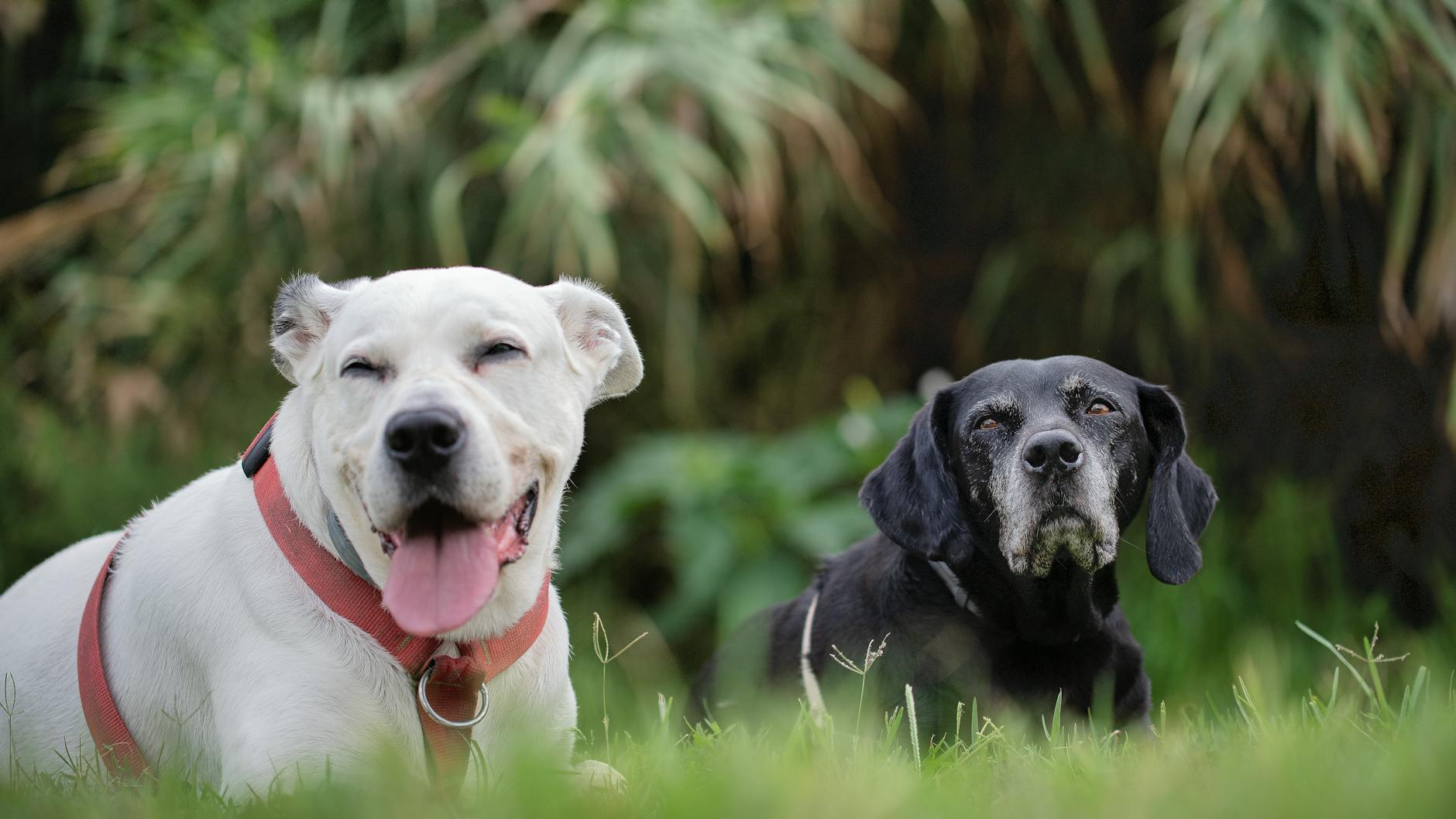
Outdoors in open shade. Not direct sun — open shade. A tree canopy that diffuses direct light, or the shaded side of a building where the light is reflected and soft. Direct midday sun on a dog creates harsh shadows under the muzzle, blows out the bright fur on light-colored dogs, and makes the animal squint. Open shade eliminates all of that and gives you even, workable light you don’t have to fight.
Golden hour for outdoor sessions. The 30–40 minutes before sunset produces low-angle warm light that rakes across a dog’s coat and reveals texture. It’s flattering on both people and animals for the same reason: the low angle minimizes harsh shadows on the face, the warm color temperature is genuinely attractive, and the soft directional quality adds dimension rather than flattening. For action shots specifically, golden hour shadows on a running dog at 1/2000 sec look excellent in a way that midday doesn’t.
Indoors near a window. The same north-or-east-facing window logic that works for portraits applies here. Dog on a bed or sofa near the window, camera between the dog and the window or slightly to one side. The pet stares out the window, which produces better expression than staring at the camera — window light falls across the face naturally, and the background is typically a soft interior that goes dark at the apertures you’ll be using. This setup requires almost no direction of the animal, which is a significant advantage.
Background management. Chain-link fences, cars in parking lots, other dogs running through the frame — these destroy pet portraits more reliably than camera settings do. Spend 30 seconds evaluating what’s behind the dog before any shot. A mass of green foliage at 20 feet, out-of-focus at f/2.8, is a reliable neutral background that works for any coat color. Look for it.
Aperture: f/2.8–f/4.0 for portraits. Shallow depth of field separates the dog from the background and emphasizes the face. The question is how shallow. At f/1.8 on an 85mm lens from 8 feet, the depth of field is roughly 2.5 inches — sharp from tip of nose to front of eyes, but ears already soft. That can be beautiful, but if the dog is even slightly angled, one eye goes soft before the other, which looks like a focus miss rather than an artistic choice. f/2.8 gives you more breathing room — both eyes sharp if the dog is reasonably parallel to the sensor plane, background still blurred.
For multi-dog shots where both animals need to be in focus: f/5.6 or f/8, and position them at the same distance from the camera.
Shutter speed: 1/500 sec minimum, 1/1000+ for action. This is the setting most people get wrong. At 1/125 sec, a dog that appears to be sitting perfectly still will produce a soft image because of small ear flicks, head tilts, and breathing movement. 1/500 sec freezes normal pet movement. 1/1000–1/2000 sec freezes a running dog at full gallop.
This means you need enough light to maintain that shutter speed at your chosen aperture and a reasonable ISO. Outdoors in daylight, 1/1000 at f/2.8 at ISO 400 is achievable with room to spare. Indoors near a window, 1/500 might need ISO 1600–3200. Accept the higher ISO — noise at 3200 is recoverable in post; motion blur on a dog portrait is not.
Autofocus: use Animal Eye AF if your camera has it. Sony’s Real-time Tracking with Animal Eye Detection, Canon’s Animal AF in the R-series mirrorless bodies, Nikon’s subject recognition in the Z-series — all of these track the animal’s eye across the frame with accuracy that wasn’t possible from manual selection five years ago. If your camera offers it, it’s the most impactful single technology change in pet photography. Turn it on.
Without dedicated animal eye AF: use a wide area continuous AF mode, keep the active point(s) on the animal’s face, and let the camera track. Single-point AF is too slow for anything but a completely stationary subject.
Burst mode. 10 frames per second minimum, higher if the camera supports it. You’re not shooting every burst — you’re shooting a 3-second sequence of a head tilt or an alert expression and selecting the sharpest, most expressive single frame afterward. Burst isn’t a substitute for timing, but in the window between “dog is interested” and “dog has looked away,” burst captures frames that single-shot misses.
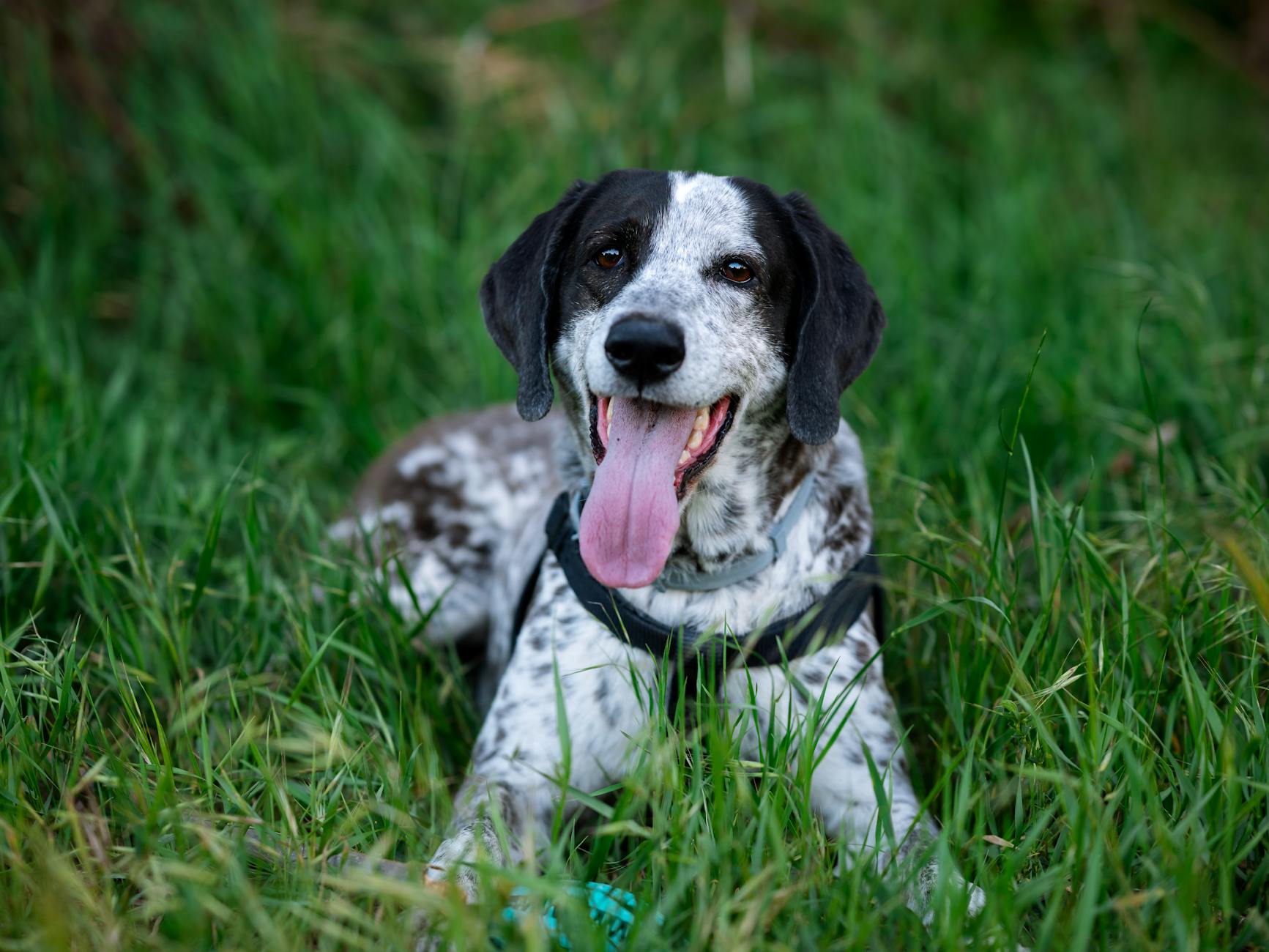
This is the question everyone searches for and the answer is more tactical than technical.
Position the attention-getter at lens height. If someone off to the side holds a squeaky toy, the dog looks at them, not at the camera. The toy or treat needs to be at the lens, or just above it — held against the barrel or briefly waved behind the camera body. The dog’s eyes should track toward the glass, not toward someone’s hand three feet to the left.
Squeak and shoot immediately. A dog’s alert expression — ears forward, eyes focused, head slightly tilted — lasts about 1.5 seconds after a novel sound. That’s your window. Squeak, wait for the tilt, shoot during the tilt. If you squeak repeatedly in the same session, the response diminishes; space it out and use different sounds.
The treat at the lens method. Hold a high-value treat (real meat, not a dry biscuit) against the front element of the lens. Dog stares at the treat, you shoot, then release the treat as reward. Works well for close portrait framing. The limitation is that the dog is staring at the treat rather than into the lens — the eye focus is slightly below center. Acceptable for most shots.
Have an assistant. Someone who knows the dog, positioned directly behind the camera and slightly above, who can call the dog’s name, make sounds, hold toys. That person is the attention director; you’re the camera operator. For a session with an energetic dog, the assistant-plus-photographer combination produces dramatically better results than one person trying to manage both jobs simultaneously.
Timing matters. Mid-session, after about 20 minutes, is usually the best window. The dog has burned off enough energy to be slightly calmer than at the start, but hasn’t reached the point of overstimulation where they stop responding to cues. Start with action and exploration shots when the dog first arrives; move to portraits once they’ve settled.
The rule of thirds applies to pet portraits the same way it applies to anything: eyes at or near the top third intersection, space in the direction of the gaze, subject off-center. A dog centered in the frame with equal space on all sides is documentary; a dog at the left third with their gaze extending to the right of the frame has visual tension.
Fill the frame. Particularly for head portraits — push in until the dog’s face fills most of the frame. Half the face in a portrait is more compelling than a small dog in the center of a landscape. The ears should be in frame. The nose shouldn’t be cropped. But there’s room to cut below the muzzle if the framing is tight and intentional.
Don’t crop at joints. The same principle that applies to human portraits: don’t cut across the paw at the wrist, don’t cut the ear in half, don’t crop the tail at mid-length. Crop between joints or outside the natural body boundaries.
Space for direction of movement. For a walking or running dog, leave negative space in the direction of travel. A dog running toward frame-right with no space to the right creates visual compression — the composition fights the motion. Running left-to-right with space on the right reads cleanly.
The feet question. Including all four paws grounds the image; cropping to chest-height or close portrait gives you more background blur and tighter focus on the face. Neither is wrong — decide which story you’re telling.
Action photography requires either very fast autofocus tracking or pre-focus technique. Both work; which you use depends on your camera and your location.
Continuous AF tracking at 1/1000–1/2000 sec. Point the camera at the dog, lock on with continuous AF, keep the active zone on the animal as they move, and shoot bursts. The AF does the work; your job is to maintain the subject in the tracking zone. At 1/1000 sec in good light, a dog running at full speed will be sharp if the AF keeps up. Modern mirrorless cameras with animal eye tracking handle this well. Older DSLR systems with slower subject recognition struggle more.
Pre-focus technique. Choose a specific spot — a patch of grass, a gap between bushes — and focus on that spot. Lock focus (or switch to manual after focusing). Have someone release the dog to run through that spot and shoot a burst as they pass through your focal plane. This removes AF latency from the equation entirely. The limitation is that you get one or two clean frames per run, and the dog needs to actually run through the spot.
Panning. Tracking a running dog at 1/125–1/250 sec while moving the camera with them produces a sharp animal against a blurred background. It looks dramatic when it works. It fails frequently. The motion of the dog needs to be lateral and at a consistent pace; the camera rotation needs to match the dog’s speed exactly. Expect to shoot 50 panning attempts to get 3 usable frames. Useful for experienced photographers looking for a different look; not the most efficient use of limited time with an energetic dog.
This is the section most guides skip, and it’s where most people’s shots of black Labradors and golden retrievers actually fail technically.
Black dogs: the real problem. Black fur absorbs light and has very low reflectance. In flat or front-facing light, a black dog’s coat shows no texture, no depth, and very little separation between one part of the body and another. The face becomes a dark mass. The result looks less like a portrait and more like a silhouette with eyes.
The solution is light direction, not exposure compensation.
Sidelight or backlight creates a rim — a bright edge along the dog’s coat that defines the shape and reveals the texture of the fur. At golden hour, this happens naturally: the low-angle sun comes from behind or to the side and traces the dog’s outline in warm light. In an outdoor shaded setup, you can position a reflector to create the same rim from one side.
For the face specifically: a white or silver reflector placed low and in front of the dog bounces fill light upward into the face and reveals eye detail that would otherwise disappear into the surrounding black fur. Think of it as the same technique used for portrait lighting — a fill source to lift shadow detail while maintaining the directional quality of the key.
Background matters enormously for black dogs. Against a dark or heavily shadowed background, the dog disappears. Use light or medium-toned backgrounds — bright green foliage, light stone, a wooden fence in dappled sunlight — that create contrast with the coat.
Metering: use spot or center-weighted metering on the dog’s face, not evaluative/matrix metering off the whole scene. If the background is bright, evaluative metering will underexpose the dog to balance the overall scene. Expose for the face.
One more option worth knowing: black dogs frequently look stunning in monochrome. The problem with color images of black dogs is that the whole tonal range collapses — but in black and white, shadow gradation becomes the subject. The black and white photography guide covers tonal control and contrast work in monochrome; those techniques applied to a black dog portrait with good sidelight can produce images that color processing can’t match.
White and light-colored dogs: the opposite problem. Light fur clips to pure white in the highlights before the rest of the scene is correctly exposed. Bright sunlight on a golden retriever’s coat is almost impossible to expose for — the highlights blow immediately.
The fix: slightly underexpose (-0.5 to -1 stop EV compensation) and recover in post from the RAW file. The exposure that looks “correct” on the histogram for the whole scene will often be 0.5–1 stop too bright for a white-coated dog. Check the highlight clipping warning after your first test shot and adjust.
Open shade or overcast conditions are your friend with light-colored dogs — the lower dynamic range of the scene makes maintaining highlight detail in the coat much more manageable.
For post-processing, the luminance of the specific color channel matters: lower the White/Yellow luminance in the HSL panel (for golden retrievers) or the White/All luminance in the Tone curve to recover coat texture without affecting the whole image. How deep to go in noise recovery when you’ve pushed exposure adjustments is covered in the noise reduction guide.
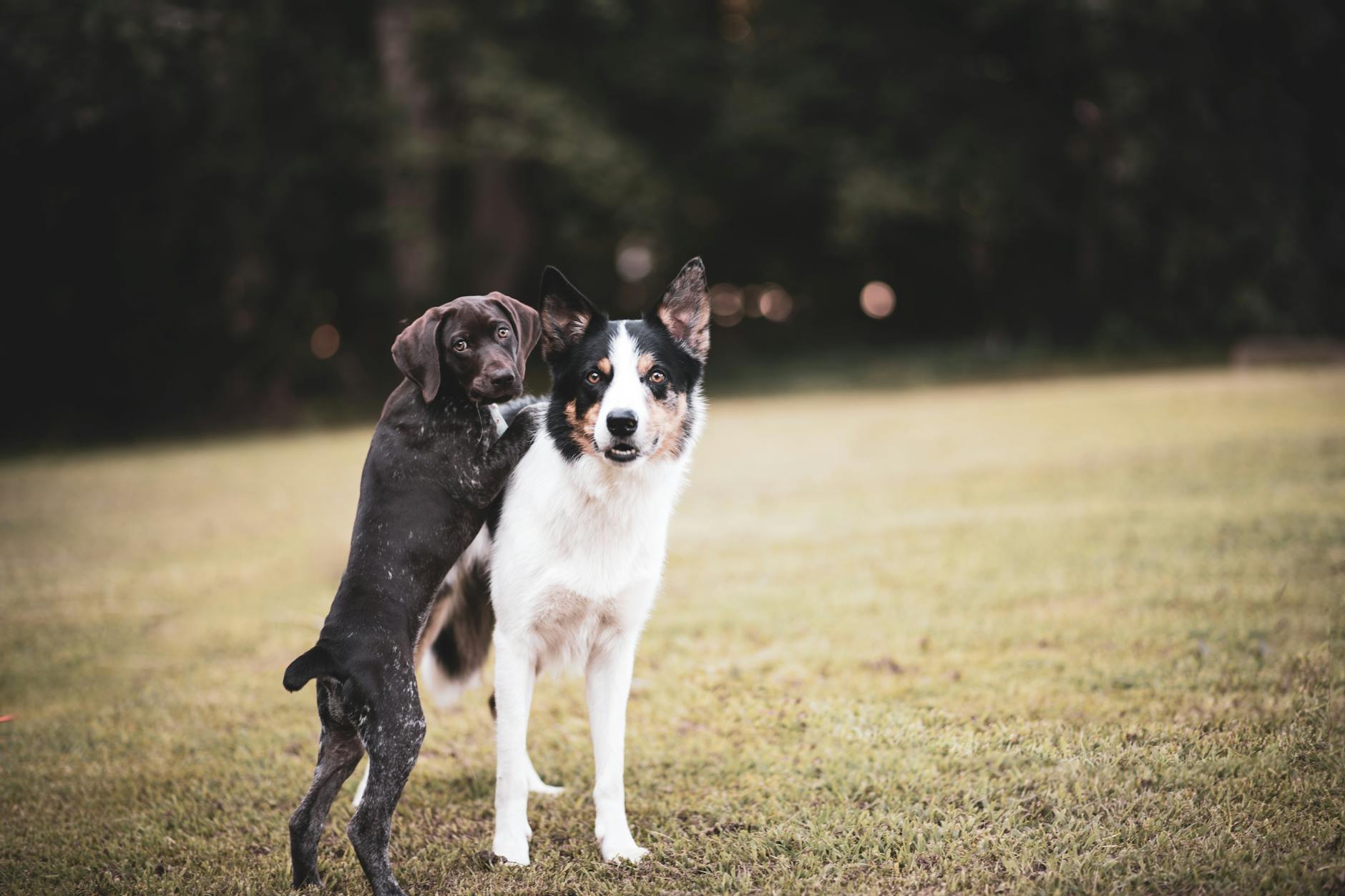
The challenge in pet-and-owner sessions is getting both subjects focused, expressive, and interactive at the same time. The dog won’t cooperate on command; the owner can.
Direction for the owner first: position them, give them a specific physical interaction (holding the dog, the dog in their lap, walking side by side), and give them something to do rather than just “hold the dog and smile.” Natural expressions come from attention directed at the dog — looking down at them, nose to nose, the dog mid-lick across the face. The moment of genuine reaction photographs better than a posed smile toward camera.
For group focus: f/4–f/5.6 when you need both the person and the dog sharp. If the dog is in someone’s arms and parallel to the sensor plane, f/2.8 works. If the dog is in front of the person at a different focal plane, you need the extra depth of field. The family dynamic between people and their animals — how genuine connection translates to images — is the same skill involved in any family photography session: stage the scenario and then wait for the real moment.
Modern flagships produce usable pet portraits. The limitations are autofocus speed and shutter performance in lower light — not the sensor itself.
Action mode on iPhone 14 and later: effectively a high-shutter, heavily stabilized mode designed for moving subjects. Works reasonably well for running dogs outdoors in good light. The images are processed heavily but sharp.
Portrait mode: use it for stationary or slow-moving pets. Turn it off for anything fast-moving — the synthetic bokeh algorithm creates artifacts on fur edges that look worse than no blur at all. The dog’s outline will have halos or mid-blur artifacts where the AI edge detection failed.
Burst on phone: on iPhone, press and hold the shutter for burst. On Android, the mechanism varies by manufacturer — most support volume button burst or a long press. Same logic as camera burst: shoot sequences and select the best frame.
Clean the lens. Phone lenses accumulate finger oil that creates haze and degrades contrast specifically in scenes with bright backgrounds (sky, windows). A microfiber cloth wipe before a pet session makes a genuine difference.
The biggest smartphone limitation for pets: processing lag. The time between tapping the shutter and the image being captured is longer than on a dedicated camera, and the burst rate is lower. Pre-empt this by shooting slightly before the peak moment rather than at it.
How do I get my dog to look at the camera?
Hold a squeaky toy or treat at the lens level — not off to the side. Squeak, wait for the alert head-tilt expression, shoot during the tilt. The window is about 1.5 seconds. Space out the squeaks across the session; repeated use in quick succession produces diminishing response.
What are the best camera settings for pet photography?
For portraits: f/2.8, 1/500 sec minimum, ISO whatever the light requires, Animal Eye AF if available. For action: f/2.8–f/4, 1/1000–1/2000 sec, highest burst rate, continuous AF tracking.
How do I photograph a black dog?
Light direction over exposure correction. Position a sidelight or rim light source to trace the dog’s outline and separate it from the background. Use a reflector to fill the face. Choose light or medium-toned backgrounds that contrast with the coat. Spot-meter on the face rather than evaluating the whole scene. In post, careful shadow lifting in the face area — expect more noise in those lifted shadows than you’d have with a lighter-coated dog.
My dog won’t sit still for photos. What do I do?
Stop trying to get them to sit still and shoot them moving instead. Action and candid shots of a dog doing what they do naturally — running, sniffing, playing — are often more characterful than posed portraits. Save the portrait attempts for the 10-minute window after exercise when energy is slightly lower. Have an assistant manage the dog while you manage the camera.
Do I need an expensive camera for pet photography?
For portraits: any camera with a 50mm f/1.8 and continuous AF works. For serious action: a camera with fast burst rate and reliable animal subject tracking matters more. Sony a6000-series, Nikon Z50, and the Canon R50 all have capable animal AF at sub-$1,000 camera prices. The lens budget is better spent on a 50mm or 85mm f/1.8 (~$125–200 used) than on a camera upgrade.
