
Donec efficitur, ligula ut lacinia
viverra, lorem lacus.
Donec efficitur, ligula ut lacinia
viverra, lorem lacus.
The inquiry email that arrives now reads differently than it did five years ago. Couples in 2026 have done research. They’ve seen the full spectrum — the airbrushed editorial shoots, the flat lay detail photos that look identical across a thousand different weddings, the heavily preset galleries where every skin tone runs warm-orange regardless of the actual light. They’ve looked at that work and decided it’s not what they want.
What they send in mood boards now is different: real laughter, messy moments, guests actually absorbed in the wedding rather than performing for the camera. The aesthetic they’re describing is not new — it’s documentary wedding photography, and it’s no longer a niche request. It’s the default.
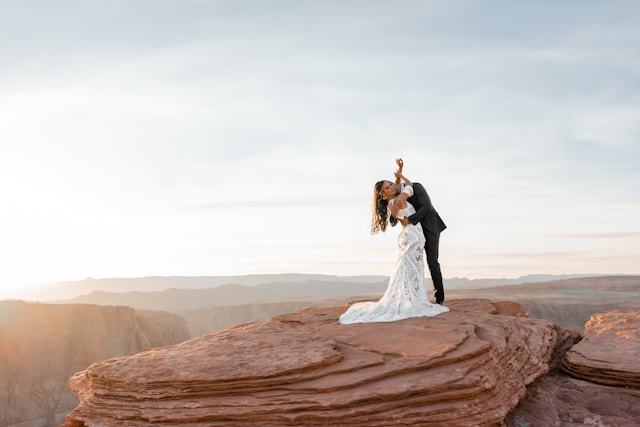
Photographer Savvy Quine of Sky and Savvy Photo describes the shift precisely: “Documentary style wedding photography is maturing beyond simple candids. The focus is emotional truth, layered storytelling, and spatial context. The result is a visual memoir where scenes carry meaning — who laughed or cried, what was authentic, and how a day truly felt.”
That’s the distinction worth understanding. A candid shot is a picture of something that happened. Documentary wedding photography is the selection, framing, and sequencing of those shots into something that tells the story of the whole day — not just the peaks, but the transitions, the quiet moments between events, the relationships between people that aren’t the couple. A grandmother at the reception table. A groomsman with his eyes closed during the first dance. The florist’s leftover stems in a bin backstage. These are the frames that make a gallery feel lived-in rather than curated.
The editorial influence is running in parallel — and it’s not contradictory. Photographer Masha Sakhno describes how the two aesthetics are merging: “Fashion and documentary are blending in fascinating ways. Think candid moments captured through an editorial lens — art direction without stiffness. This hybrid approach creates images that feel both effortless and elevated, appealing to couples who want authenticity and artistry.”
In practical terms: you’re still thinking about light, background, and composition. You’re still positioning yourself to intercept a moment before it happens. The difference from traditional wedding photography is that you don’t stop the moment to arrange it — you anticipate it and be there.
“No more washed-out colors or overexposed photos. Couples are seeing more requests for true-to-color imagery. They spend a lot of time choosing hues and details — they don’t want them drastically altered,” says photographer Keri Calabrese. “Editing styles are becoming less aggressive and more natural. The true colors of skin tones, florals, and landscapes are kept at their original hues. Photos are becoming less dark and moody and less contrasty.”
This is the direct reversal of the presets-on-everything era. The dark-and-moody orange-shadow look that dominated wedding photography from roughly 2015 through 2022 is now identifiable as a period aesthetic — visible evidence that your gallery was shot in a specific era rather than a timeless document. Couples who are looking at their parents’ wedding photos from the 1990s and thinking about what their own photos will look like in 30 years are specifically avoiding anything that will date obviously.
True-to-color doesn’t mean flat. It means the white dress looks white in most light, the florals retain the hue the couple chose, and skin tones don’t shift dramatically across different lighting conditions within the same gallery. Consistent color temperature across a full gallery — outdoor ceremony, dark reception hall, candle-lit dinner — is technically harder to achieve than a uniform warm preset but looks better for longer.
Calibrating your white balance in mixed lighting is where this breaks down most often. A reception hall with orange tungsten uplighting, white LED from AV screens, and natural light bleeding through windows requires custom white balance decisions frame by frame — or a well-considered mixed-lighting preset that handles the dominant source while flagging the outliers for manual correction in post. Relying on Auto White Balance in this environment produces galleries where the color temperature shifts by 800K between consecutive frames, which makes batch processing nearly impossible.
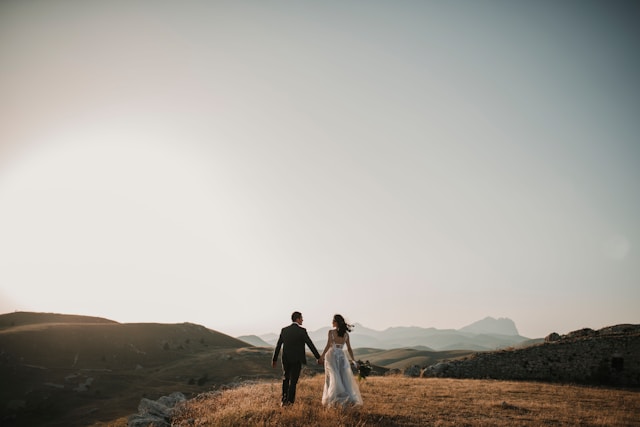
Two apparently contradictory trends are both gaining momentum, and they come from the same underlying impulse.
Couples in 2026 are pulling from multiple eras and aesthetics, remixing them into something personal. Camcorders, Super 8, and lo-fi textures making a comeback aren’t about novelty — they’re about the intimacy these mediums capture, resulting in more feeling and less filter.
Actual 35mm film in wedding photography is genuinely experiencing a revival, not just digital emulation. The constraint of 36 frames per roll forces a shooting discipline that produces a different quality of attention than spray-and-pray digital bursts. Most photographers doing hybrid film-digital workflows shoot their ceremony and candids on digital for coverage reliability, then use film for portraits and specific intentional moments where the slower pace and limited frames improve the result rather than just adding an aesthetic overlay.
The direct flash trend runs in the same emotional direction but produces the opposite visual register. “A handful of crisp, celeb-style frames on the dance floor and during the exit adds energy and attitude. The difference in 2026 is restraint — a few bold hits balanced with warm room light so the vibe stays chic instead of harsh,” says photographer Peterman. “Direct flash gives a feeling of nostalgia and a retro ’90s vibe. These moments are fun-filled and the photographs are bold and romantic,” adds Davis.
The technical execution that works: an on-camera flash — the Godox V1 or Profoto A2 both balance portability and power — used selectively during reception dancing and exits, where the ambient light is already chaotic and the direct flash contrast reads as intentional drama rather than a failure to bounce. The same flash at a ceremony reads as intrusive. Context matters more than the equipment.
More couples are requesting seamless, multi-format storytelling — photography, videography, drone, Super 8, and analog all from one unified team. “It’s about trust, consistency, and an editorial aesthetic that runs through every medium,” explain photographer duo Julia & Gil.
This is reshaping how serious wedding photography businesses position themselves. A photographer who delivers only stills is increasingly leaving revenue on the table — not because video is more important than photography, but because couples who want a cohesive visual record of their wedding prefer sourcing it from one team with a unified aesthetic rather than coordinating between separate vendors who may never have worked together.
The practical response for photographers who don’t want to become cinematographers: build referral relationships with videographers whose aesthetic matches yours closely enough that you can confidently recommend each other. If your editing style is warm, film-inspired, and documentary, the videographer you send clients to should produce work in the same register — otherwise the wedding album and the highlight reel feel like they came from different events. When that referral relationship is strong enough, offering coordinated booking through your studio becomes a legitimate package option without requiring you to operate outside your skill set.
Drone photography follows the same logic. Drone wedding photography has become a standout trend for 2026, offering aerial views of venues and unique group perspectives from overhead — shots that highlight the full wedding party in creative formations or capture the scale and setting of the venue in ways ground-level photography can’t match. Most photographers don’t own or pilot drones themselves — they subcontract to a licensed operator for specific coverage windows within the day. Building that into a package with defined timing (aerial venue shots before guests arrive, aerial group portrait after ceremony, aerial reception exit) handles client demand without requiring a certification you don’t have.
The average cost of wedding photography in the United States hovers just above $3,700 for eight hours of Saturday coverage, excluding albums, prints, and engagement sessions. Across a broader range, most couples spend between $2,500 and $6,500, with high-end photographers reaching $10,000 and above.
According to the Wedding Report, 90% of wedding planning happens online and 78% of couples say pricing is the most important factor when looking for vendors. Many couples say they do not reach out to schedule a call if a photographer does not have pricing available on their website. 2026 couples are not avoiding human connection — they are delaying it, and wanting to qualify vendors before reaching out.
This is the data point that most photographers resist and the one they most need to act on. Hiding pricing behind “contact me for a custom quote” filters out the casual inquirers but also filters out the decisive, research-oriented couples who will book quickly once they find the right fit. Transparent starting prices on your website — even a clear minimum investment figure — convert qualified leads faster than the mystery approach.
Second shooters are becoming an expectation rather than a premium add-on for weddings above 100 guests. A second shooter is particularly valuable for large weddings of 150 or more guests or for couples getting ready in separate locations simultaneously. At the pricing point where professional wedding photography lives in 2026, the argument for including a second shooter in any full-day package is stronger than the argument for charging it as a separate line item — because the coverage quality visibly improves, which justifies the overall price point to clients who are comparing packages across photographers.
Gallery delivery timelines have also tightened. The industry standard of 6–8 weeks has compressed in competitive markets. Photographers delivering within 30 days are using that timeline as a specific differentiator, and the AI-assisted culling tools that made this possible — Aftershoot, FilterPixel — are now operational requirements rather than early-adopter advantages.
The most common point where wedding photography fails isn’t the shooting. It’s the timeline.
A wedding with back-to-back family formals immediately after a 30-minute ceremony, followed by a couple portrait session, followed by a cocktail hour the couple is expected to attend — that’s a schedule built by someone who has never shot a wedding under pressure. Family formals at standard pace require 2–3 minutes per grouping, and most families have 10–15 groupings. That’s 20–45 minutes minimum, and anyone who tells you they can do it faster while also doing it well has never tried to locate the cousin who slipped away to the bar.
The current shift toward shorter family formal lists reflects this reality rather than a philosophical preference. 2026 couples are requesting shorter lists of must-have family portraits instead of dozens of formal groups, with more candid reception coverage during cocktail hour and dancing, and schedules focused on guests spending time together instead of long, formal photo sessions.
Your job in the planning process is to set an honest timeline — not the optimistic one that gets the booking, but the one that produces the gallery. Build 10 minutes of buffer between every major timeline segment. Identify the moment in the day where late-running events compress the couple portrait session, and discuss it explicitly in advance. The couple portrait session is typically the only scheduled block of the day where you have control of the light and the subjects simultaneously — protecting it is worth the uncomfortable conversation during planning.
How do I transition my brand from dark-and-moody to true-to-color editing without alienating existing clients or confusing couples who’ve already booked?
The transition works best when framed as evolution rather than correction. Update your portfolio on your website to reflect the direction you’re moving — start with 10–15 images in the new style and replace old work progressively over 3–4 months rather than overnight. For couples who’ve already booked based on your old portfolio, have a direct conversation before their wedding: explain that your editing has evolved toward a more natural look and show them examples. Most couples respond positively — they chose you for your eye, not exclusively for a specific color grade. The ones who hired you specifically for the dark-and-moody aesthetic are worth a direct conversation; you may need to deliver something closer to what they expected while continuing to evolve your default approach for future clients.
Should I price my wedding packages with a second shooter included or as a separate add-on, and does it affect my booking rate?
Including the second shooter in your base package for full-day coverage above a minimum guest count — typically 100+ — tends to increase booking conversion because it removes a variable that causes couples to compare packages across photographers on an apples-to-oranges basis. When a second shooter is a separate add-on, couples mentally subtract it from your price during comparison shopping. When it’s included, the value proposition of your package is clearer. The counter-argument is that it limits flexibility for smaller, more intimate weddings where the second shooter budget is unnecessary overhead. A clean solution: build two base packages — intimate weddings under 75 guests with a solo photographer, and full-day packages above 75 guests with a second shooter included — and price the latter to absorb the cost at your actual rate for reliable second shooters, which currently runs $400–$800 per day depending on your market.
Couples keep requesting Super 8 and film as part of their package but I’m not set up for analog workflows. How do I handle these requests professionally?
The most effective approach in 2026 is building a referral network that includes a film photographer you trust rather than attempting to offer it yourself without the existing equipment and darkroom or lab relationships. When you receive this request, you have two options: subcontract through your studio, marking up a film photographer’s rate by 15–20% to coordinate the coverage and ensure aesthetic alignment, or refer out directly and let the couple hire a separate film shooter. Subcontracting only makes sense if you have a consistent film photographer whose work integrates with yours visually — mismatched aesthetics between your digital work and a film shooter’s output produce galleries that feel disjointed. If you don’t have that relationship, a transparent referral is more professional than promising something you’ll struggle to coordinate well. Build the relationship first, then offer the service.
My galleries are consistently praised in reviews but my booking inquiry rate is dropping. What’s the most likely problem?
The Wedding Report data is direct: 78% of couples cite pricing as the most important factor when choosing vendors, and many do not reach out if pricing isn’t visible on a photographer’s website. If your inquiry rate has dropped without a corresponding drop in review quality, the most probable cause is either a pricing page that’s absent or unclear, or a portfolio that hasn’t been updated to reflect 2026 aesthetic expectations — specifically, if your gallery still leads with heavily filtered or moody work while couples are predominantly searching for documentary and true-to-color styles. Audit your website from a couple’s perspective: Can they determine your starting investment in under 30 seconds? Does your portfolio reflect the style descriptions in your inquiry form? Does your About page give them enough personal context to decide whether to reach out? Fixing these three things typically costs nothing except an afternoon of editing your website content.
