
Donec efficitur, ligula ut lacinia
viverra, lorem lacus.
Donec efficitur, ligula ut lacinia
viverra, lorem lacus.
There’s an irony buried in how black and white photography is finding its audience again. We have more color data per pixel than ever — modern full-frame sensors resolve tonality across a dynamic range that would have seemed impossible ten years ago — and photographers are stripping it all out on purpose. Not because they can’t handle color. Because color has become noise.
In a world oversaturated with colorful images showcasing the latest trends in color editing effects and presets, there’s a quiet and growing resurgence of black and white photography. That observation from Fstoppers at the start of 2026 isn’t a retrospective take. It describes something happening right now, in client briefs, in award submissions, in what gets shared versus what gets scrolled past.
This isn’t nostalgia dressed up as taste. It’s a functional response to a specific problem.
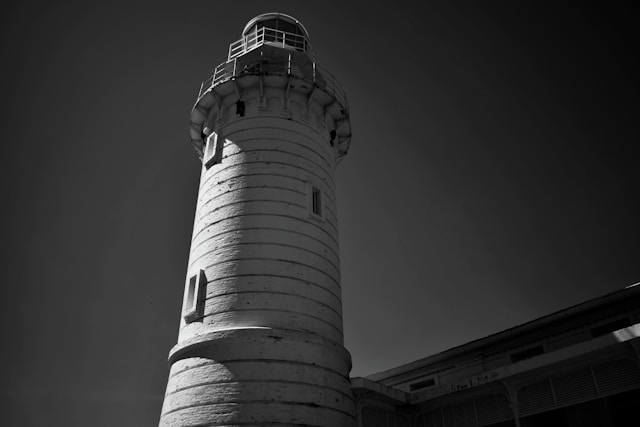
Every major feed — Instagram, LinkedIn, editorial websites — currently runs at maximum chromatic saturation. Presets that pump teal shadows and orange skin are everywhere, applied uniformly, indistinguishable from each other. AI image generators default to full-spectrum, high-contrast color because that’s what most training data looked like. The result is a visual landscape so consistently saturated that a properly toned black and white image stops the scroll the way a loud room goes quiet when someone stops talking.
Black and white photos feel intentional and timeless. They stand out against all the colorful, busy, trendy photos we see — most of which have been shot for the effect of the color grade or lens characteristics, rather than an attempt to communicate something meaningful.
That’s the competitive logic. But there’s also a craft argument worth making.
Color carries emotional information that the photographer doesn’t always control. A red jacket in the background pulls attention away from a face. A green cast from office lighting fights the skin tone you’re trying to protect. Remove color, and suddenly you’re working with what you actually control — light direction, shadow depth, tonal separation, the geometry of a face. By removing color, black and white photography distills the image to its essence, ensuring the viewer focuses on what truly matters to the story.
This is where most photographers underestimate the discipline. Monochrome doesn’t forgive weak composition. It amplifies it.
The 2026 Life Framer Black and White Photo Contest results are instructive. The selected winners stand out for their storytelling, composition, and emotional impact — transforming everyday moments, landscapes, and portraits into memorable visual art using contrast, mood, and the simplicity of monochrome photography. What the jury descriptions repeatedly return to is presence — the feeling that an image imposes itself rather than invites.
One juror noted: “This photograph imposes itself on the viewer; one has no choice but to look. Its intensity lies in its oppressive quality, reinforced by close framing and stark contrasts.”
That’s not an accident of subject matter. It’s a tonal decision. Crushing the blacks to true black — not to the muted grey that most photographers stop at — while holding micro-detail in the shadows underneath creates depth that reads as physical weight on a screen. The images that don’t land in monochrome competitions are almost always the ones where someone desaturated a color photo and called it a conversion. A real black and white image starts with light designed for it.
High-contrast black-and-white storytelling ranks among the top active photography trends of 2026 alongside film-inspired grain used as a deliberate texture choice. These aren’t separate movements — they’re symptoms of the same editorial instinct: make an image feel like it was made by a person, not processed by an algorithm.
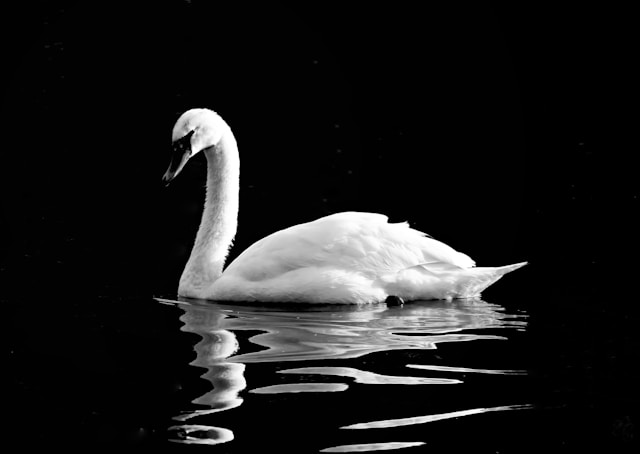
The single biggest mistake in black and white work is treating it as a post-production decision. You convert in Lightroom, push the contrast slider, add some grain from a preset, and wonder why it looks flat. It looks flat because the light wasn’t built for it.
Black and white lives or dies on tonal separation — the ability to distinguish between two areas of similar brightness without color doing the work. A blue sky and white clouds look distinct in color. Strip the color and they can merge into the same grey unless you’ve either used a red filter at capture (which darkens blue sky dramatically, pushing it toward black and making clouds pop) or planned for it in the lighting setup. This is not intuitive if your entire photographic background is color work.
For portraits, side lighting — a single bare strobe or a window from a 45-degree angle — does more for a monochrome portrait than any post-processing decision you’ll make later. Optimal shooting times for high-contrast black and white images are typically during the early morning or late afternoon when the sun sits lower on the horizon, casting long, pronounced shadows and creating dramatic highlights. During those windows, texture in skin, fabric, and architectural surfaces reads as three-dimensional rather than flat. The same face shot with flat noon light will never recover that depth in conversion, no matter how hard you push the clarity slider.
Sensor technology has genuinely improved the raw material here. Modern camera sensors have significantly improved their dynamic range, allowing photographers to capture a broader spectrum of grays more precisely than ever before. The Sony A7R V and the Nikon Z8, for instance, give you enough latitude in the RAW file to pull texture from deep shadows while holding highlight detail in blown-out windows — simultaneously. That wasn’t reliably possible at this price point five years ago. Use it. Expose to the right, protect the highlights, and recover the shadows in post.
Leica’s M11 Monochrom remains the reference point for dedicated black and white sensors — a 60-megapixel BSI sensor with no Bayer color filter array, which means every pixel is capturing luminance rather than one-third capturing luminance and two-thirds interpolating from neighboring pixels. The resolution difference in practice is significant: finer grain, crisper micro-contrast, better tonal gradations in skin. It is also expensive enough that most working photographers won’t build a case for it.
The practical alternative: shoot in RAW and do a proper manual channel mix conversion rather than clicking “Black and White” in Lightroom’s HSL panel. The channel mixer lets you control how each color in the original image maps to grey — push reds lighter to brighten skin in portraits, darken blues to deepen skies, lighten greens to separate foliage tones. This is what Ansel Adams was doing with physical color filters at capture. You’re doing the same thing in post. The result is a conversion that looks like a decision, not a desaturation.
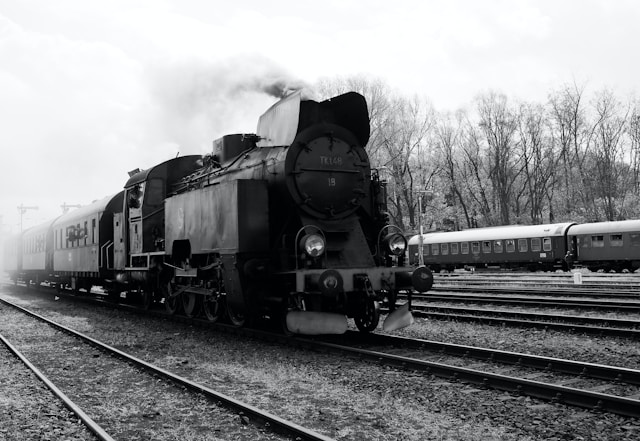
Street photography and monochrome have a long, earned relationship — and the reason is practical, not romantic. Black and white has the power to create interest from chaos, emphasizing emotion over color noise, and tone over hue. A crowded market street in color is a compete for attention between every awning, jacket, sign, and shadow in the frame. The same frame in monochrome reads as shapes, movement, and light.
Street photographer Martin Waltz argues that black and white is a great way to reduce the visual complexity of an image: “Photography is the art of reduction. A painter adds things to frame. A photographer reduces elements.” That framing holds up in 2026 in a way it didn’t need to a decade ago, because now you’re also reducing against the noise of AI-generated imagery that fills the same feeds. Monochrome street photography has become one of the clearest visual signals that a human was actually present in that moment, holding a camera.
This is where grain matters more than people realize. Not grain added in Lightroom as texture, but grain that comes from pushing ISO 3200 on a Fujifilm X-T5 in underlit conditions. There’s a structural difference — real high-ISO grain interacts with the scene differently than a grain overlay. Experienced viewers see it. It reads as evidence of a real exposure decision under real conditions.
Monochrome photography makes its strongest argument on paper — not on a screen. A well-printed black and white image on fiber-based baryta paper holds tonal depth that a backlit display simply can’t replicate. The archival community has known this for decades. What’s changed in 2026 is that more photographers are coming back to fine art printing as a revenue stream, not just an exhibition exercise, and black and white work translates to print better than almost any other genre.
A 20×24 inch print from a 60-megapixel RAW file converted properly holds grain structure at viewing distance that feels photographic rather than digital. That distinction has market value. Clients who want wall art — not social content, but something permanent — are increasingly choosing monochrome for that reason.
The resurgence isn’t sentimental. It’s responding to a real gap in what the current visual landscape can offer.

Is it worth shooting in-camera black and white JPEG alongside RAW, or is that just a gimmick?
It’s useful — not as a delivery format, but as a compositional tool. Shooting RAW + JPEG with a black and white picture profile active lets you review your composition in monochrome on the back screen in real time, which trains your eye to see tonal separation rather than color. The RAW file retains full color data, so you haven’t locked yourself in. On Fujifilm bodies, the ACROS film simulation is particularly well-tuned — it adds a specific luminance response curve with lifted blacks and micro-contrast in the midrange that’s worth studying even if you ultimately process in Capture One or Lightroom.
How do I approach skin tones in monochrome portrait work without them reading as flat or grey?
The answer is in your lighting contrast ratio, not in post-processing. A 3:1 lighting ratio — key light roughly three times the power of your fill — creates enough shadow depth on one side of the face to give the skin dimensional structure in black and white. Flat, even lighting with a 1:1 ratio produces grey skin because there’s no tonal variation to separate the planes of the face. In post, pulling the red and orange channels slightly lighter in the channel mixer brightens warm skin tones without adding the artificial glow of Lightroom’s skin smoothing tools.
How should I handle the grain debate — is heavy grain currently in or out in professional contexts?
Context-dependent, but the direction is clear: grain used with intention reads differently than grain used to mask noise. In documentary and street work, high-ISO grain from a real exposure decision carries credibility — it’s evidence of shooting conditions. In commercial portrait or branding work, grain should be subtle enough to add texture without announcing itself. The problem with most Lightroom grain presets is uniformity — real film grain isn’t evenly distributed across the frame, it’s denser in shadows and mid-tones. Silver Efex Pro (now part of DxO’s suite) still produces the most convincing simulated grain structure of any software available, because it modulates distribution by tonal zone rather than applying a flat overlay.
Is monochrome work financially sustainable in 2026, or is it a portfolio exercise?
It depends entirely on where you take it. Fine art printing, editorial work, and documentary photography are the strongest commercial contexts for dedicated monochrome work. Personal branding shoots are increasingly requesting black and white selects alongside color — not as a replacement, but as a parallel deliverable that clients use for specific platforms like LinkedIn, where monochrome reads as authoritative rather than decorative. The photographers building sustainable income from black and white work in 2026 are the ones who have developed a visual language specific to it — not the ones who convert selectively when the color doesn’t work out.
