
Donec efficitur, ligula ut lacinia
viverra, lorem lacus.
Donec efficitur, ligula ut lacinia
viverra, lorem lacus.
A client books a boudoir session. She’s nervous, unsure what to wear, half-convinced she’ll hate the images. Three hours later she’s standing in front of a screen at her reveal appointment, looking at a photo of herself she’s never seen before — not a retouched fantasy version, but something that looks like her, only lit properly, posed intentionally, and shot by someone who understood what they were doing. She cries. Not because she looks perfect. Because she looks real.
That experience is what boudoir photography is selling in 2026. Not images. Not prints. That moment.
Understanding the shift happening in this genre right now matters — not because trends are worth chasing blindly, but because the clients walking through your door in 2026 want something different than the clients from five years ago. If your work is still optimized for the airbrushed fantasy aesthetic that defined the early 2010s, you’re answering a question the market stopped asking.
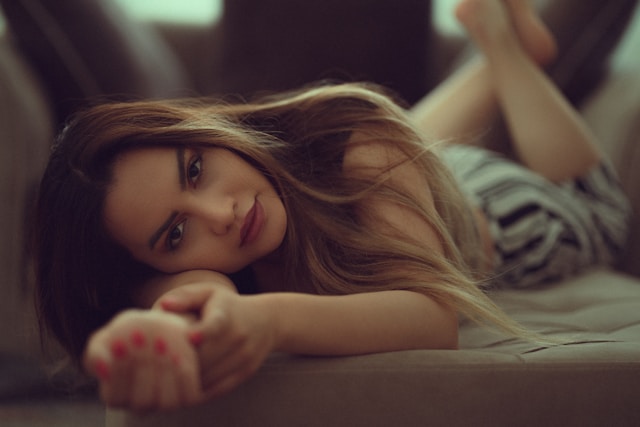
Gone are the days of overly airbrushed images that erase your identity. In 2026, more clients want their real selves celebrated — skin texture, freckles, curves, and all. Boudoir is becoming less about an idealized fantasy and more about honoring authentic beauty.
This isn’t a niche preference. It’s a response to AI saturation — the same market force reshaping every genre. When image-generation tools can produce a technically flawless female form in seconds, the commercial value of technical flawlessness collapses. What AI cannot replicate is the specific human being in front of your lens, in the specific vulnerability of that session, captured by a photographer who built enough trust to actually access it.
Boudoir photography is no longer about performing for the camera. It’s about creating a space for women to feel seen, supported, and comfortable in their own skin. That framing from photographer Kerry Jones captures the operational consequence: the session itself has become the product, not just what the session produces. Clients are choosing photographers based on the experience they promise, not just the portfolio they show.
Heavy retouching is becoming a liability rather than a selling point. Skin smoothed past recognition, waists digitally reduced, proportions quietly adjusted — these are the edits that clients now notice and reject. The subtle version of retouching that removes temporary blemishes while preserving texture, pores, and the evidence that this is a real body — that’s where the editorial standard is moving.
The milestone-session market is expanding. Women are booking sessions to commemorate life transitions, and these sessions are becoming sacred rites of celebration, not just photo shoots. Divorce, cancer remission, weight loss or gain accepted, a fortieth birthday, a relationship ended on their own terms — the emotional context has shifted from “gift for my partner” to “something I’m doing for myself.”
This changes the consultation. A client booking a bridal boudoir shoot and a client booking a post-divorce session need different versions of the same reassurance — that this space is safe, the images will feel like them, and the photographer has done this before. The conversations that build that trust happen before anyone walks into a studio. Your inquiry response, your prep guide, the language on your website — all of it signals whether you understand what they’re actually asking for.
The 2026 boudoir client cares about the “why.” Eco-conscious shoots featuring ethically sourced props and sustainable materials are becoming the gold standard for high-end sessions. That extends to wardrobe. Clients increasingly arrive with outfits that have personal meaning — a partner’s shirt, inherited lingerie, something worn on a significant day — rather than items selected purely for visual effect. This is the client telling you the story they want documented. Work with it.
The aesthetic range is also widening. Alongside the minimalist natural-light look that dominated Instagram for the last few years, fantasy themes are gaining real traction — castlecore aesthetics featuring candelabras and moody directional lighting, sensory sets built with velvet, lace, and layered fabric for depth and visual weight. These aren’t novelty requests — they’re evidence of clients who have done research, know what they want, and are choosing photographers who can actually deliver it. This is a segment worth developing if your studio has the space and the styling capability.
This is where most boudoir photographers plateau. They learn one reliable setup, it works well enough, and they never push past it. The problem is that a single setup can’t serve the range of client needs in 2026 — from the client who wants soft, skin-flattering window light to the one who wants shadow-heavy drama from a single bare strobe.
Natural light is regularly preferred by photographers of boudoir because it often has soft and flattering qualities. The warm, golden glow of late afternoon light is particularly versatile — with careful manipulation of camera settings and posing, you can completely change the look of images by making use of depth and dimensionality with light and shadow. The limitation is control. A cloud covers the window at the wrong moment and the whole sequence shifts. Natural light looks organic and undirected because it is both of those things — which means the photographer’s entire technical job shifts to positioning the subject relative to existing light rather than shaping the light itself.
Studio flash gives you back control. A Profoto B10 Plus or a Godox AD400 Pro positioned at 45 degrees through a large softbox — 90x120cm minimum — produces a key light that wraps skin without the flat midday-sun look that makes contour disappear. For clamshell lighting on portraits: key light at 45 degrees above eye level, reflector or second strobe below at 45 degrees pointing up, and you’ve built the setup that makes skin look dimensional without harsh shadows on one side. The issue is that it can look manufactured if the client is uncomfortable — because a technically perfect exposure on a tense body reads as exactly what it is.
Use aperture priority starting at f/2.8 for environmental context shots, then open up to f/1.4–f/2 for intimate close-ups with background separation. Keep ISO between 400–800 in most lighting conditions to maintain image quality while allowing faster shutter speeds for genuine expressions. Shooting at f/1.4 on a 85mm lens on a Sony A7R V or Nikon Z8 at ISO 400 in a moderately lit room is technically straightforward. Getting a real expression in that window — that’s the craft.
Location matters more for boudoir than almost any other photography specialty. Clients need to feel completely safe and private. A busy commercial studio with foot traffic won’t work. Budget $2,000 to $5,000 for basic studio equipment — you’ll need professional lighting, a variety of backdrops or furniture pieces, and a high-quality camera system.
The studio space itself is a session prop whether you treat it that way or not. A bedroom set with white linen, good wood tones, and two or three anchor pieces of furniture that work photographically — a chair, a chaise, a section of wall with texture — gives you the variety to move through a 2-hour session without the background becoming repetitive. A minimum working space of around 12×12 feet gives you enough room to shoot wide enough for environmental frames while still compressing into tight portraiture with a short telephoto.
If you want a professional, reputable, full-service boudoir experience, expect to invest $2,000–$8,000 from start to finish. That’s the national average for what luxury studios consistently deliver. The structure that works best for sustainable pricing separates the session fee from product purchases — not because it confuses clients, but because it correctly represents how clients actually make decisions. They book the session based on experience and portfolio; they decide what to spend on products at the reveal, when they’ve already seen what they’re buying.
Strong boudoir businesses are structured to reach $5,000 average client spend — not by charging more per image, but by building reveal appointments where clients see their work printed and presented rather than emailed as a digital gallery. Clients buy what they can hold. Sample albums from quality print labs like Artifact Uprising or Queensberry on your studio table will outsell a digital preview every time.
With growing awareness around digital privacy, clients want total control over their images — from guaranteed gallery settings to selective sharing rights. Photographers who offer encrypted galleries, private proofs, and respectful social media policies are setting the standard.
This is no longer an optional policy — it’s a prerequisite for high-value clients. The default assumption among 2026 clients is that their images are private unless they explicitly choose otherwise. Reversing that assumption — treating portfolio use as opt-out rather than opt-in — erodes trust before the session begins.
Your client agreement needs to address four things explicitly: how images are stored, how long they’re retained, whether they’re used for marketing (and how clients opt in), and what happens if a client requests deletion. These aren’t bureaucratic details. They’re the reason a nervous client decides to book with you instead of someone else.
Women book the shoot for the photos, but they leave with something far more valuable: permission to take up space.
That outcome doesn’t happen by accident. It happens because the photographer handled the consultation honestly, managed the pacing of the session, knew how to redirect when someone froze up, and understood enough about light and posing to make the work look like it came from someone’s best day rather than a nervous afternoon. The genre rewards practitioners who understand that the technical work — exposure, lens choice, lighting ratio — is only half the job. The other half is the room.
Get both right, and clients bring their friends.
How do I handle clients who specifically request heavy retouching when my brand is built on authentic editing?
This is a conversation worth having before the session, not after the reveal. Your prep guide and consultation are the right place to set the expectation clearly: you retouch to remove temporary concerns — a blemish, a red mark from clothing — but you preserve skin texture, natural lines, and the visual evidence that this is a real person. Framing it this way helps most clients understand what they’re getting. For clients who push back hard, ask what’s driving the request. Often it’s a specific insecurity — a scar, stretch marks, something they’ve been self-conscious about. Addressing that directly in the posing and lighting during the session removes the need for heavy retouching afterward. If after that conversation the client is still looking for an airbrushed aesthetic that conflicts fundamentally with how you work, it’s worth considering whether this is the right fit. A mismatched expectation produces a difficult reveal appointment regardless of how good the images are.
What’s the most reliable lighting setup for body diversity — clients who range significantly in size and shape?
The setup that adapts most reliably across body types is a large key light source — 90cm octabox or larger — positioned slightly to the side and above eye level, combined with a reflector opposite to control shadow depth rather than a second strobe. The large source creates wrap-around quality that fills naturally without flash-on-camera flatness. Shadow depth is where you make real-time adjustments: pull the reflector closer to fill more, move it farther to build dimension. For larger bodies specifically, feathering the light — pointing the edge of the modifier toward the subject rather than the center — softens the edge falloff and reduces the contrast that can read as harsh on curves. For every client, the posing and the light work together. A pose that builds an S-curve in the body combined with that wrap-around key light will flatter a range of sizes that no single preset pose handles consistently.
Is it worth investing in a dedicated studio space versus shooting on location in hotels and client homes?
It depends on which part of your business generates the most revenue. If your average sale is above $2,000 and you’re booking consistently, a dedicated studio pays for itself in client experience quality and repeat business. A studio gives you control — of the light, the temperature, the privacy, the props, and the reveal space, which is where the real money is made. Location sessions in hotels have their own appeal, particularly for luxury positioning, but they introduce variables that eat into session time: inconsistent light, room layout constraints, noise from adjacent rooms. The hybrid approach that works well in 2026: a dedicated studio for the majority of sessions — even a well-converted spare bedroom with blackout curtains and a quality lighting setup — with hotel sessions offered as a premium add-on at a rate that accounts for the additional prep time.
How should I approach posing direction with clients who have never been photographed this way before?
Start with movement rather than static poses. Asking someone to hold a pose immediately makes them self-conscious about whether they’re doing it correctly. Asking them to slowly turn toward the window, or to look down at their hands, or to adjust the fabric of what they’re wearing — these are action-based directions that produce natural body positioning without the client freezing up trying to perform. Keep your feedback warm and specific: “Chin forward just slightly — yes, that, exactly” works better than “relax” as direction, because “relax” doesn’t tell anyone what to do with their body. WPPI Boudoir Summit educators emphasize that language, prompts, and the quality of connection the photographer builds during a session are what generate the expressions that make images sell — not posing formulas. Learn three or four reliable foundational poses that work across body types, then build variations from each. Consistency in your posing architecture gives you a session structure to fall back on when a client goes quiet.
