
Donec efficitur, ligula ut lacinia
viverra, lorem lacus.
Donec efficitur, ligula ut lacinia
viverra, lorem lacus.
The over-saturated sunset era is ending. Not with a dramatic announcement — just with fewer people engaging, editors rejecting, and photographers themselves quietly moving away from images that look like a Luminar preset ran unsupervised. The landscape photos getting attention in 2026 are the ones that feel like they came from somewhere specific, shot by someone who was actually cold and wet and awake at 4:30 AM — not composited from stock sky libraries and dialed up to maximum drama in post.
That’s the shift. Everything else flows from it.
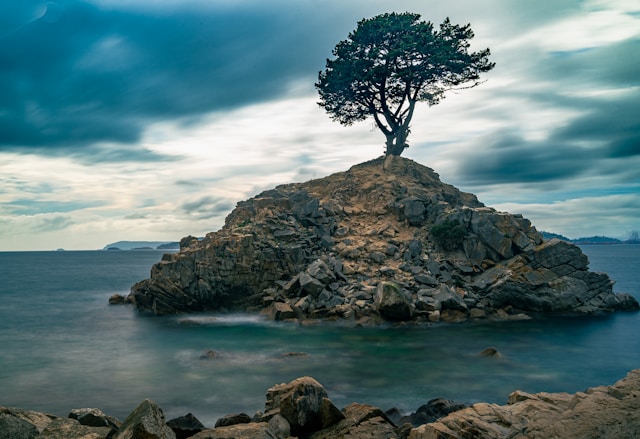
André Alexander, a landscape photographer who has documented this shift directly, describes building a story during a winter morning in Finnish Lapland: “Instead of focusing on one ‘hero’ landscape, I built a story: the snow settling on the roof at sunrise, boots by the door, the vast white forest opening up just behind the cabin. None of the images was particularly dramatic on its own, but together they captured the feeling of waking up in total silence.”
That instinct — building context rather than chasing the single peak frame — is defining how the best landscape work is being sequenced in 2026. Photographers are increasingly thinking in terms of narrative sequences: pairs of images, triptychs, and cohesive series designed to convey an atmosphere rather than a single moment. On social media as well as in galleries, cohesive series capture attention and build a recognizable visual language in a way isolated brilliant frames no longer do.
The practical implication: shoot more deliberately at each location. Don’t arrive, fire the telephoto at the mountain, leave. Spend the time to find the detail shot that grounds the sequence in a specific place — frost on a specific rock formation, a particular bend of a river, the edge where the light breaks over a ridgeline. Those images give the hero frame context that transforms it from impressive to meaningful.
More and more photographers are moving away from distant destinations to focus on what happens close to home. It is no longer the “where” that matters most but the “when”: fog rolling across a plain at dawn, unexpected snow on a familiar street, storm light over a known field.
This isn’t a compromise forced by economics, though economics are part of it. It’s the recognition that familiarity with a location produces better images. A photographer who has visited the same marsh 40 times across different seasons knows exactly which light angle, which water level, and which weather system produces the frame they’re after. A first-time visitor is guessing.
Scottish landscape photographer Kim Grant articulates the slow travel logic clearly: “Instead of trying to visit as many places as possible, people are choosing fewer locations and spending more time in each one, allowing them to properly immerse themselves in the scene.” By slowing down and engaging the senses and thinking more as a creator than a snapper, photographers produce images that reflect their inner experience as much as the external landscape.
The locations that yield the strongest local work are usually ignored precisely because they’re familiar. The field you drive past twice a day looks completely different at ISO 3200 with a 15-second exposure during a storm. You just have to be there when conditions arrive — which requires knowing the location well enough to anticipate them.
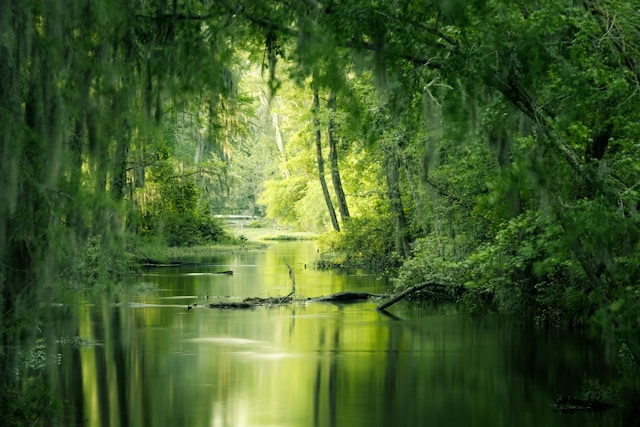
Intentional camera movement — shooting at slow exposures while deliberately moving the camera — has moved from a novelty technique to a legitimate tool for landscape photographers who want images that can’t be replicated by anyone else who visited the same spot.
“Each frame becomes a unique interpretation rather than a literal record of a place,” says Kim Grant. “By moving your camera during an exposure, you can turn familiar landscapes into flowing lines, soft textures and painterly scenes that often resemble watercolours or pastels. No two images will ever be the same, which makes ICM endlessly exciting.”
The technical starting point: shutter speeds between 1/15s and 1/2s give enough motion to blur meaningfully without completely losing structure. A 6-stop ND filter in broad daylight gets you into that range from a base exposure that would otherwise demand 1/1000s. Breakthrough Photography’s X4 series is the current reference for glass-element ND filters that don’t introduce the color cast problems that plagued earlier resin options.
The movement itself matters as much as the duration. Vertical movement creates painterly streaks of color and tone that abstract a forest into something closer to a Mark Rothko canvas. Horizontal movement at a coastal scene turns wave detail into smooth horizontal bands of color. Rotation at the center of the frame produces a radial blur that can make a stand of trees feel like it’s dissolving. None of these looks the same twice — which is the point.
Multiple respected buying guides identify the Sony a7R V as the strongest all-around landscape body currently available — not just in the Sony lineup, but across all manufacturers. Its 61MP full-frame sensor delivers large resolution and wide dynamic range, performing at or near rivals like the Nikon Z8 in resolution and dynamic range. For photographers whose primary output is large prints, 61 megapixels at this dynamic range gives you the ability to crop to a sub-frame composition while retaining enough resolution for a 24×36-inch print — useful when a scene’s most interesting element is off-center and the foreground won’t support recomposing.
The Nikon Z8 is the alternative argument. The Z7 II remains the most logical Nikon choice if landscapes are your primary focus and image quality per dollar is the priority. If you also shoot wildlife or action seriously, the Z8 earns its price.
For wide-angle work — which is most landscape work — the lens matters more than the body above a certain sensor quality threshold. The Sigma 14-24mm f/2.8 DG DN Art lens, available for Sony E and Leica L mount, is the practical recommendation for photographers who need close-focus capability alongside coverage. Standard manufacturer 14-24mm options don’t focus as closely, which matters when you’re placing a foreground element 20cm from the lens to create depth. The Sigma focuses to 28cm at 14mm — a meaningful operational difference when composition demands it.
Tripods. Carbon fiber. The weight difference between carbon fiber and aluminum becomes a real calculation across a 12km mountain approach. Gitzo’s GT3543LS Series 3 has been the reference standard for years because it doesn’t flex under 10kg of payload at full extension and survives conditions that kill cheaper tripods. If that price point is a problem, the Really Right Stuff TFC-14 is half the weight and half as expensive, and it holds a Sony body with a 400mm lens without any vibration at 1/4s — which is the test that matters.
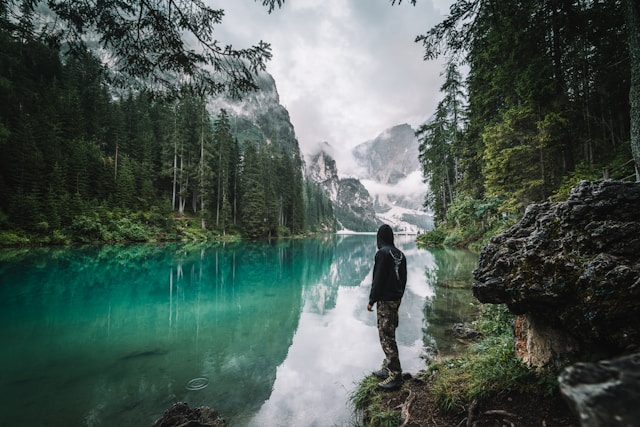
The philosophy shift in editing mirrors the aesthetics shift in shooting. Post-processing techniques should communicate how a place felt, not just how it looked. Adjust exposure and contrast, refine white balance, and reduce noise — but keep the soul of the scene intact.
The tools themselves have changed meaningfully. Photoshop 2026 includes an upgraded Remove Tool operating at “remove tool 3” quality, offering generative remove without consuming generative credits — a significant improvement for removing powerlines, fences, and tourists from landscape frames without the multi-step workaround that previously required. For noise reduction, DxO PureRAW 4’s DeepPRIME XD2 engine processes RAW files before they enter Lightroom, producing Linear DNG files with substantially cleaner shadow detail than Lightroom’s native denoise handles — particularly useful for high-ISO night and twilight landscape work on APS-C sensors.
Over 74% of photographers now use AI tools to accelerate post-processing, with 68% viewing AI tools as essential for maintaining profitability in a crowded market. The distinction worth making: AI tools that apply style — Luminar’s sky replacement, generic presets — tend to produce the over-processed look the market is moving away from. AI tools that handle technical problems — noise reduction, distraction removal, lens correction — free up time to do the intentional creative work manually. Use AI for the former aggressively and for the latter with restraint. Your editing fingerprint should be visible in the tonal choices. Not in the algorithm’s.
Physical prints are experiencing a genuine revival, with photographers of all generations rediscovering the power of a printed image placed on a wall, engaging with a space and settling into it over time.
This matters for how you expose in the field. A file destined for a 40×60cm print on aluminum gets exposed differently than one destined for Instagram. For print, shadow detail matters more than it does on a backlit screen — crushed blacks that look dramatic on a monitor look dead on paper. Exposing to the right — setting exposure so the histogram pushes to the right edge without clipping highlights — captures the maximum shadow information in the RAW file even if the preview looks slightly overexposed on the back screen. Recover the highlights in Lightroom. You cannot recover shadow detail that was never captured.
The print format also changes compositional decisions. A panoramic ratio like 2:1 or 3:1, cropped from a high-resolution file, works beautifully on the long wall of a living room in ways that a standard 3:2 frame doesn’t. Shooting with that in mind — leaving more compositional room in the wide dimension, thinking about how a scene translates to a horizontal strip rather than a standard frame — builds in flexibility that a post-crop can exploit cleanly. At 61 megapixels, cropping a 3:1 panoramic from a standard frame still gives you a 20MP output file — more than enough resolution for a 120cm wide print.
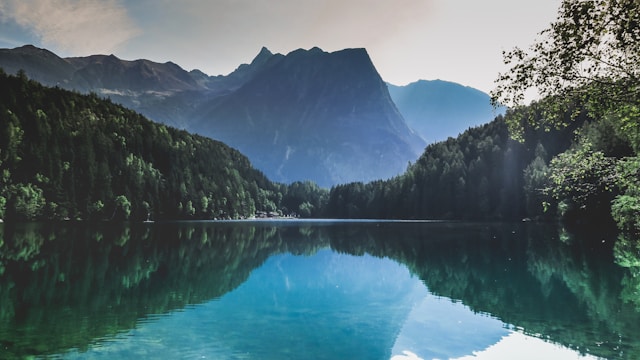
Is full-frame still necessary for landscape photography, or have APS-C sensors closed the gap enough to justify the weight savings?
The gap has narrowed considerably but not closed entirely — and where it matters depends entirely on your output size. APS-C cameras from Nikon, Canon, and Sony can produce excellent landscape images and are a strong option for photographers who want a balance between quality and cost. For night photography and most landscape work, sensor sizes below APS-C are worth skipping. The practical distinction: for prints under 60cm on the long edge, a current-generation APS-C body like the Fujifilm X-T50 at 40.2MP produces files that are indistinguishable from full-frame in final output. For gallery-size prints above 80cm — where shadow gradations and micro-contrast start to reveal sensor-size differences — full-frame files hold up under scrutiny in ways that APS-C doesn’t quite match, particularly in underexposed shadow regions. If your primary output is digital, the APS-C weight and cost advantage is a sound choice. If you’re printing large, the full-frame investment pays off in the output.
How do I approach the ethics of AI sky replacement and generative removal in landscape work? Where’s the line?
The line is disclosure, and it’s moving. Removing a candy wrapper from a foreground rock with Photoshop’s Remove Tool sits in the same category as waiting for a jogger to pass before firing the shutter — neither is in the frame because you chose to exclude it, not because you fabricated the scene. Replacing a cloudy sky with a more dramatic one from a different day, at a different location, in different light — that’s fabricating a scene that never existed, and most serious landscape photography publications and competitions disqualify it. The practical test: did that sky exist at that location? If not, the image is a composite and should be labeled as such. The Photographic Society of America maintains specific categories distinguishing photographic image making from photo manipulation — their definitions are the closest thing to an industry standard and are worth knowing before submitting competitive work. Within your own commercial or fine art practice, the only obligation is transparency with your clients and audience.
My landscape images consistently test sharp on the back screen but show camera shake when viewed at 100% in Lightroom. What’s causing it and how do I fix it?
This is almost always mirror slap on older DSLR bodies, or electronic shutter vibration interaction at specific shutter speeds on mirrorless. With a mirrorless body on a tripod at shutter speeds between 1/15s and 1/2s, the IBIS system itself can introduce micro-vibration when it’s fighting against the camera’s own mechanical stability on a locked-down surface. Disable IBIS when the camera is on a tripod — most manufacturers now include a tripod detection mode that does this automatically, but manually disabling it is the reliable fix. Use a 2-second self-timer or a remote release to eliminate contact vibration at the moment of exposure. For truly long exposures above 30 seconds, vibration from wind matters more than camera technique — a sandbag hanging from the center column of the tripod adds mass that resists movement at lower frequencies than the tripod legs absorb alone.
How do I build a coherent portfolio from landscape work without every image looking like it came from the same three locations?
The answer is visual language, not geographic range. The photographers with the most coherent landscape portfolios have consistent tonal choices — the same relationship between shadow depth and highlight roll-off across every image — not consistent locations. Before you cull for your portfolio, strip the images of their metadata and look at them purely as tonal studies. Do the darkest shadows land in the same zone? Does the horizon treatment — wide negative sky versus weighted foreground — follow a pattern you made intentionally? Does the color temperature move consistently toward warm or cool? A portfolio of 20 images shot across five countries that share a consistent tonal philosophy reads as a body of work. The same number of technically strong images from the same mountain range but with inconsistent treatment reads as a folder of good shots. The editing choices you make consistently, shoot after shoot, are more important to portfolio coherence than where you point the camera.
