
Donec efficitur, ligula ut lacinia
viverra, lorem lacus.
Donec efficitur, ligula ut lacinia
viverra, lorem lacus.
There’s a photograph winning awards this year that was shot on a Nikon Z8 at 0.4 seconds, f/32, ISO 32. A mountain hare, 30 meters away, barely visible in snow. The photographer — 20-year-old German Luca Lorenz, who just won the GDT Nature Photographer of the Year 2026 — used intentional camera movement to turn the animal’s near-invisibility into the subject of the image rather than a failure of the frame. The technique created a painterly effect that reflects the animal’s near invisibility in its snowy environment and carries a serious message: the Aline mountain hare is increasingly threatened by climate change, with warming conditions meaning snowfall often arrives too late, leaving animals in white coats against snowless ground — far more visible to predators.
That image is the argument for where wildlife photography is heading in 2026. Not faster autofocus. Not higher burst rates. Purpose.
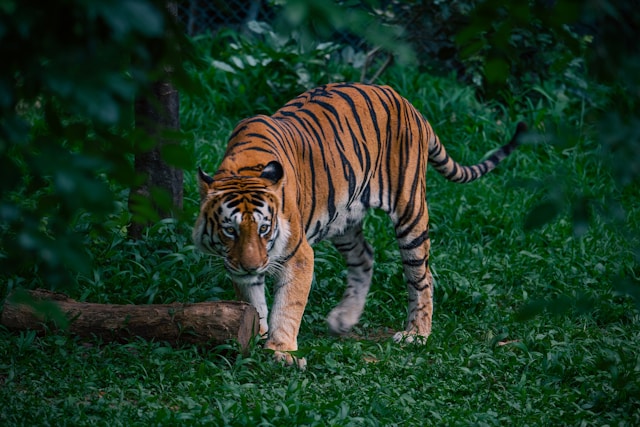
Tools such as animal-eye tracking, subject recognition, and AI-driven autofocus allow even beginners to produce sharp, well-exposed images. Yet truly outstanding wildlife photography still depends on qualities technology cannot replicate: patience, anticipation, deep behavioural understanding, and field awareness.
That’s the honest summary of where the gear landscape sits. AI-powered autofocus systems are widely described as approaching “magic” in real-world performance, particularly in fast-action scenarios such as wildlife and sports photography. Cameras can now anticipate motion trajectories, maintaining focus accuracy even in erratic conditions.
The consequence: sharp birds in flight no longer differentiate work. Every serious photographer with a current-generation mirrorless body can produce technically clean flight shots. What separates the memorable images from the technically accomplished ones is behavioral knowledge — being in position before the wing extends, understanding the light angle, waiting for the interaction that tells a story rather than simply demonstrating that a bird was airborne.
Today’s high frame rates of 30–60fps and pre-buffering features allow photographers to capture moments that might otherwise be missed. Large sensors encourage cropping, meaning many compositional decisions are postponed to the editing stage rather than resolved deliberately in the field. This is precisely the habit to resist. Cropping as a compositional strategy builds a library of technically acceptable images and a weak sense of framing. The discipline of composing tightly at capture — which requires knowing where the animal is going before it moves — produces the images that stand out when thousands of sharp flight shots look identical.
The sweet spot for wildlife is right around 30–50 megapixels. This provides a good-sized image for cropping while allowing the camera to maintain a higher burst speed without blackouts. The practical burst rate sweet spot is 15–20 fps — any more and culling volume becomes punishing; any less and erratic movement causes missed frames.
Three bodies dominate real-world wildlife use in 2026 — not because other options fail, but because these three have been tested in the conditions that matter.
The Nikon Z8 at $4,000 offers a 45.7MP stacked sensor, 20fps RAW, 3D tracking that locks on erratic subjects with a predictability that matters in freezing rain when you’ve been holding position for two hours. A coastal brown bear photographer described the Z9 — essentially the Z8 with an integrated grip — as the first camera he’s owned that feels like it was designed by people who actually shoot in those conditions. The Z8 delivers the same sensor and tracking performance at meaningfully less weight.
The Sony A9 III’s global shutter eliminates rolling shutter distortion entirely. At 30fps with 50 megapixels on a global shutter sensor, it’s particularly capable for photographing fast-moving animals where traditional sensors produce visible skew artifacts. Flash sync at any shutter speed also opens up fill-flash techniques for nocturnal and low-light work that traditional curtain sync can’t support.
Canon’s EOS R1 positions at the top of the field. The R6 Mark III inherits improved subject-based tracking and pre-continuous shooting of about 20 frames, meaning the camera captures moments before you fully press the shutter — and can capture up to 40fps once you do. For photographers already in the RF lens ecosystem, the R5 Mark II at 45MP and 40fps RAW with a deep buffer represents the most complete single-body solution Canon has offered.
The argument for used DSLSRs deserves serious consideration for specific applications. Award-winning wildlife photographer Will Burrard-Lucas, whose ‘Crossing Point’ series won at the SWPA 2026 awards, uses second-hand Canon EOS 6D bodies for his remote camera traps — specifically because they’re affordable, reliable, robust, and deliver excellent low-light image quality. The low cost matters when setting up multiple traps in harsh environments where gear damage is a real possibility. A $200 used 6D deployed as a camera trap risks less than a $4,000 mirrorless body sitting unattended in a Kenyan reserve for six months.
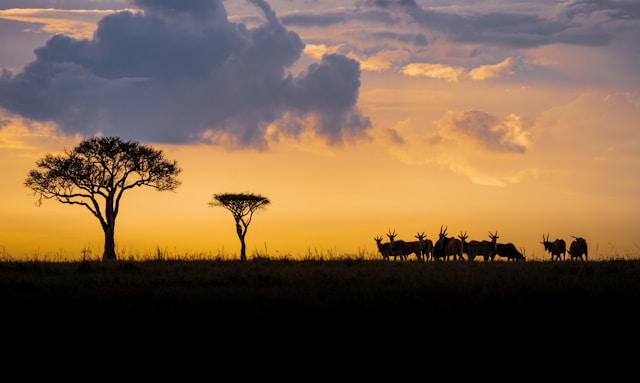
A wildlife photographer’s lens choice depends on one thing most guides understate: how far you typically are from your subjects. Anyone doing safari work from a vehicle can use a 100–400mm or 200–600mm zoom comfortably — the weight sits on a bean bag, not a shoulder. Anyone hiking into alpine terrain for mountain wildlife, or working on foot in forest environments, faces a different calculation entirely.
The Nikon Z 180–600mm f/5.6–6.3 VR is Luca Lorenz’s lens of record for the GDT 2026 winning image — and it’s worth understanding why. It’s described as the first “affordable” ultra-telephoto zoom for Z-system mirrorless cameras. At roughly $1,700, it covers the range that makes birds and medium mammals actually fillable in the frame without a $10,000 prime. The variable aperture is the trade-off: at 600mm you’re at f/6.3, which means ISO climbs faster in low light than a fixed f/4 alternative.
The Sony 200–600mm f/5.6–6.3 G OSS covers the same range on E-mount and has been the volume choice for Sony wildlife shooters for several years. Paired with a 1.4x teleconverter — Sony’s SEL14TC — it becomes a 280–840mm f/8 to f/9 system that handles distance subjects well in good light.
For anyone considering Sigma or Tamron alternatives: the 150–600mm Sports and Contemporary lenses from Sigma remain valid options at their price points. The Tamron 150–600mm G2 with its 2.2-meter minimum focus distance handles closer encounters — wading birds, snakes, small mammals — that a 600mm prime physically can’t frame without retreating.
Most wildlife photographers never use camera traps. That’s why the images that come from them stand apart.
A camera trap is a remotely triggered camera — usually activated by a passive infrared sensor, a trip beam, or a sound trigger — deployed at an animal trail, water source, or den site for days or weeks at a time. The photographer’s judgment happens entirely before the shot: choosing location based on behavioral knowledge, setting the frame and exposure for a scenario that may or may not occur, and checking results after the fact.
Burrard-Lucas needed affordable, reliable and robust gear with excellent low-light image quality for his series, and the Canon EOS 6D fit the bill. Old DSLSRs have a technical advantage for camera trap use: reliable flash sync, physical shutter mechanisms that don’t require constant power, and body designs that accept weatherproofing modifications more easily than modern mirrorless bodies with electronic interfaces.
A basic camera trap setup that produces publishable results: Canon EOS 6D or similar DSLR with a compatible Camtraptions PIR sensor, two or three small off-camera flashes positioned to light the scene without harsh shadows, and a Gitzo tripod or custom bracket anchored to eliminate vibration in wind. The entire setup costs under $1,000 if you source DSLSRs used. The patience to deploy it effectively costs nothing but time and requires knowing where animals actually move — which is behavioral fieldcraft, not gear knowledge.
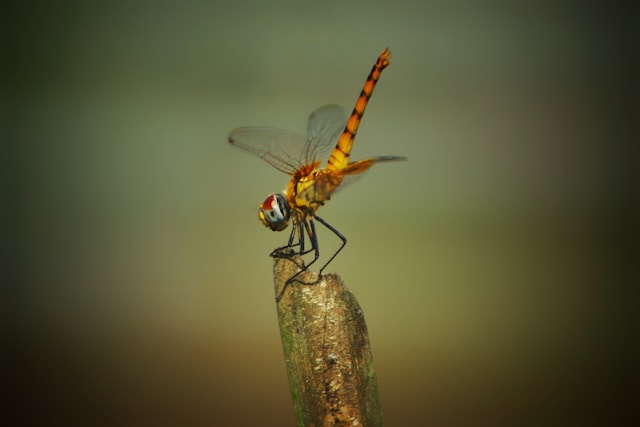
Luca Lorenz’s work reflects an important approach in contemporary wildlife photography: using artistic techniques to communicate environmental urgency. The shift from documentation to advocacy is reshaping how the best wildlife work is evaluated in 2026. Competition judges, editorial clients, and the photographers themselves are increasingly asking whether an image tells a story worth telling — not just whether it’s technically remarkable.
Field skills, behavioural knowledge, anticipation, and deep camera understanding form the bedrock of success. For those beginning their wildlife photographic journey, the first investment should not be the latest gear or editing software. Master the fundamentals: understand aperture, shutter speed, ISO, focal length, distance, and light. Study animal behaviour. Learn patience. Develop awareness.
Disturbance is a real cost that gets understated in gear-focused photography culture. Flushing a nesting bird for a shot at landing behavior, approaching a predator kill to get closer, baiting animals to control their position — these produce technically strong images at a cost to the subject that doesn’t appear in the EXIF data. The work that wins awards, generates editorial interest, and builds a durable reputation in 2026 is increasingly the work that respects these costs. Not as a moral statement but as a practical reality: the images that matter are made by photographers who were trusted by their subjects enough to get close on the animal’s terms.
When does it make sense to upgrade from a 20fps body to a 40fps body for wildlife work, and is the culling overhead worth it?
The burst rate decision is really a subject-type decision. The practical burst rate sweet spot sits at 15–20fps in real-world wildlife work. Any more and you have substantially more culling; any less and erratic movement can cause missed frames. A 40fps burst over 2 seconds generates 80 frames — from which you may realistically select 3–5 keepers. The culling overhead is real. Where 40fps earns its keep: unpredictable behavior sequences where the peak moment is a 50-millisecond window — a bird striking prey on water, a predator making contact, a bird in a complex maneuver where wing position defines the quality of the frame. For perched subjects, behavioral portraits, and most mammal work, 15–20fps is not the limiting factor in your keeper rate. Your positioning, light angle, and behavioral anticipation are.
How do I approach ethical use of camera traps to ensure I’m not disrupting the subjects I’m photographing?
The core principle: the trap serves observation, not control. Deploy traps at existing movement corridors — trails, water sources, territorial boundaries — where animals would move regardless of your presence. Don’t modify habitat to improve the shot: removing vegetation, baiting to hold position, or altering a scene in ways that change animal behavior. Check the trap infrequently and approach the site from downwind to minimize human scent disturbance. Allow enough distance between the trigger and the frame that the camera fires as the animal moves through naturally, not as it investigates the camera housing. For sensitive species or protected areas, check relevant wildlife agency guidelines before deploying any remote equipment — permit requirements vary significantly by jurisdiction and species.
The Sony A9 III’s global shutter is clearly excellent for fast action — but what are the practical limitations photographers don’t talk about enough?
The ISO floor is the most commonly cited limitation. The Sony A9 III’s ISO starts at 250 — which means in bright conditions you can’t go below ISO 250 without using ND filtration, making it less flexible for outdoor work where you want to shoot wide open at low base sensitivity. The global shutter architecture also trades some high-ISO noise performance against traditional rolling shutter sensors at equivalent pixel densities; in poor pre-dawn light the differences are visible, though the camera handles ISO 6400 cleanly enough for wildlife work. The $6,000 price point means it sits in a tier where most wildlife photographers are making a specialist argument — the global shutter benefits matter most for birds in flight and fast-moving small mammals. For larger, slower mammals and most safari work, the Nikon Z8 at $2,000 less makes the more rational cost-performance case.
My images from new camera trap deployments are consistently blurring when the subject triggers the sensor. How do I diagnose and fix this?
Three causes produce camera trap blur, and they require different fixes. First: PIR sensor delay. Most PIR-triggered cameras have a latency of 0.1–0.5 seconds between motion detection and shutter firing. Animals walking at normal pace travel 30–60cm in that window — enough to exit the intended frame zone entirely, and enough to create motion blur at shutter speeds below 1/500s. The fix is positioning the trigger closer to the sensor zone and using sound triggers or beam breaks for faster response. Second: shutter speed too low for ambient or flash conditions. Set a minimum shutter speed of 1/250s for walking animals, 1/1000s for anything moving faster. Third: vibration in the trap housing. A camera mounted to a stake or branch that flexes in wind will produce blur at any shutter speed. Lock the housing to a fixed, rigid anchor point — a nearby tree trunk drilled and bolted, or a dedicated steel ground spike — and the problem resolves immediately.
