
Donec efficitur, ligula ut lacinia
viverra, lorem lacus.
Donec efficitur, ligula ut lacinia
viverra, lorem lacus.
The market did something unexpected in 2026. After years of inventory moving so fast that a blurry iPhone photo was sufficient to generate multiple offers, the pace slowed. The NAR revised their 2026 sales jump from 14% down to 4% as of April. Mortgage rates ticked back up. Homes that used to sell in hours are now sitting for weeks.
For real estate photographers, that’s actually good news — not because the volume returned, but because a slower market forces agents to compete on presentation. When a listing sits, agents market harder. The marginal value of professional photography, video, and floor plans increases precisely when the easy-sell conditions disappear.
This is the moment to understand what the market actually needs and price accordingly.
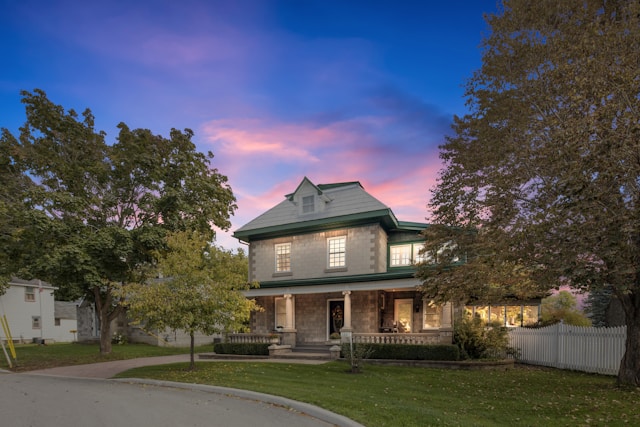
Listings with professional photography receive 61% more online views and sell up to 50% faster. Properties with aerial drone images sell 68% faster than those without. Listings with video content generate 403% more inquiries — yet only 38% of agents currently use video and just 9% create listing videos.
That last number is the most important one in this entire article. The gap between demand signal and actual adoption is enormous. Most agents understand intellectually that video outperforms static photography for inquiry generation. Most of them still don’t buy it consistently. The reasons are familiar: cost sensitivity, workflow friction, uncertainty about ROI on individual listings. Those barriers represent a service design problem more than a market demand problem. Photographers who solve the friction — easy ordering, fast turnaround, social-ready formats delivered automatically — are capturing that gap.
3D tours jumped from 6.7% of add-on orders in 2024 to 11%, the biggest year-over-year increase among all services. Social media reels doubled from 0.8% to 1.7%. Both are still underpenetrated. The video number doubling sounds dramatic; in absolute terms it’s still barely one in sixty listings. The growth runway here is longer than most photographers realize.
HDR processing gave interior real estate photography a decade of service and a reputation problem. The over-processed halos, the blown-out window views, the muddy shadow recovery — agents started recognizing the look and associating it with photographers who hadn’t updated their technique. Flambient replaced it, and the market hasn’t looked back.
Flambient lighting has become a more common way to create bright, balanced interiors without the heavy halos, muddy midtones, or exaggerated contrast often associated with older HDR processing.
The technical process: shoot multiple ambient-only exposures to build a clean base layer, then fire an off-camera flash — bounced off the ceiling or through a diffuser panel — and blend the flash frame in post to fill shadow areas that ambient alone can’t recover. The flash gives you control over the shadow side of rooms with difficult mixed lighting; the ambient maintains the natural look of window light and interior fixtures. Done well, you can’t see the flash in the final image. Done wrong, you get a weird secondary shadow or a slight color mismatch between the ambient and flash sources.
Cleaner framing, controlled natural light, and less visual clutter are helping properties look more modern and easier to scan, especially on mobile. Buyers move quickly through online listings — in response, agents and photographers are relying more on flambient lighting, AI decluttering, and intentional composition.
The minimalist direction in composition follows directly from how buyers encounter listings. On a phone screen, a busy room with too many objects in the frame reads as visual noise before it reads as a room. The industry standard moving into 2026 is decluttering before shooting — not staging with elaborate furniture, but removing personal items, appliances from countertops, and anything that interrupts the eye’s path through the space.
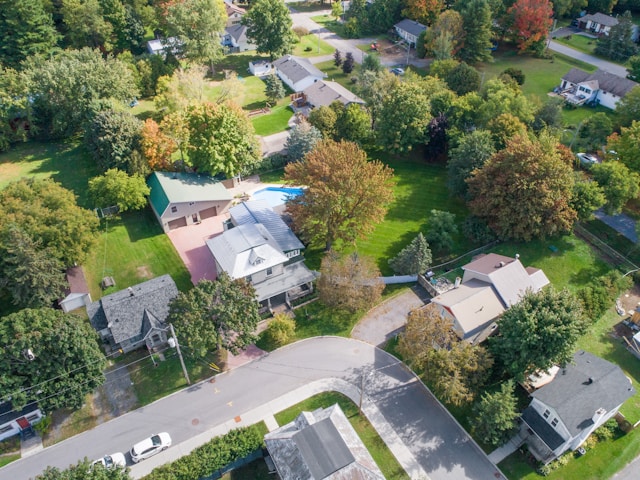
71% of real estate photographers are now using AI tools, with some reporting up to 90% faster editing. That stat requires context to be useful, though. Faster editing on what? Sky replacement and object removal have been the clearest wins — not because the output is perfect, but because the time reduction is real and the results pass the threshold for MLS listing quality without extensive manual cleanup.
Sky replacement that used to take 10–15 minutes per exterior shot now takes under a minute with tools like Luminar’s Sky AI or Adobe Photoshop’s built-in sky replacement. Object removal for minor clutter — a garden hose, a recycling bin visible through a window, a switch plate — is handled fast enough that doing it manually feels anachronistic.
Virtual staging is the faster-growing application. Virtual staging helps buyers visualize vacant spaces without actual furniture costs. The price gap between physical staging ($1,500–$3,000 for a few rooms) and virtual staging ($50–$150 per room through services like Styldod or BoxBrownie) has created a clear value proposition for empty listings. Agents who wouldn’t have paid for physical staging often convert on virtual staging because the math makes sense on any listing above median price.
The compliance issue matters here. California AB 723, effective January 1, 2026, requires conspicuous disclosure when real-estate images are digitally altered and requires access to the original, unaltered image. At the national level, NAR’s Article 12 requires REALTORS to present a true picture in their advertising and marketing. Virtual staging must be labeled as such. Sky replacements that misrepresent actual conditions — adding a blue sky to a property where the rainy climate is relevant information — sit in ethically questionable territory even where not legally required. The practical rule: AI edits that clarify the property are generally defensible; AI edits that misrepresent it are not.
The essential visual package for a listing in 2026, at minimum: high-quality photos that tell a story, a clear floor plan, and a short vertical video for social media. For luxury properties, drone photography and a 3D tour remain valuable additions.
That floor plan requirement is new behavior. In 2026, a listing without a floor plan is often viewed as incomplete by serious remote or out-of-state buyers. Out-of-state buyers who won’t visit before making an offer need spatial logic that photos can’t provide. A good photo of a kitchen tells you the kitchen looks nice. A floor plan tells you the kitchen is between the garage entry and the living room, which matters for how a family will actually use the space. These are different types of information, and both are required by buyers who make serious decisions remotely.
iGUIDE, Matterport, and CubiCasa are the dominant floor plan capture systems in the professional market. CubiCasa’s phone-based capture is genuinely usable for standard residential listings and produces schematic floor plans fast enough to include in same-day delivery. Matterport’s 3D capture produces the most accurate spatial data but at higher hardware cost and longer capture time. For a mid-tier residential market, CubiCasa solves the floor plan gap at a price point that makes sense on every listing. For luxury and architectural work, Matterport’s accuracy justifies the additional time.
The vertical video component is the one most photographers underestimate as a business opportunity. Video is the native language of social media and the key to reaching the widest audience. You simply cannot share a 3D tour on Instagram. Video dominates for social media because it is shareable, and the demand for it is increasing the revenue per listing order.
A 60-second vertical real estate reel shot on the same visit as the stills — B-roll of key rooms, exterior approach, lifestyle details — requires 20–30 minutes of additional capture time and 1–2 hours of editing at standard pace. AI-assisted editing tools are compressing that second number significantly. Pricing it as a separate add-on at $150–$300 on top of a base photography package turns a 30-minute capture window into meaningful additional revenue per job.
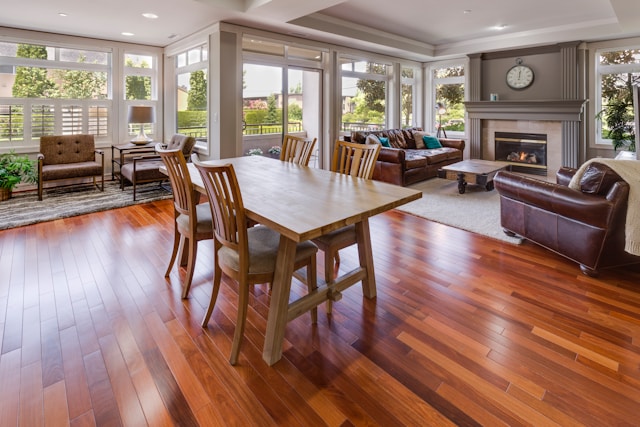
In a frantic seller’s market, homes sell regardless of media quality, leading agents to cut corners. In a balanced or slow market, inventory sits longer — this forces agents to invest more in high-end marketing, including twilight shoots, drone work, and video, to make their listings stand out.
Twilight photography specifically is the upsell that converts best on listings that are struggling. A seasonal refresh is a targeted service for listings that have been on the market for 21 or more days. The exterior of a house that’s been sitting since winter looks different surrounded by summer greenery. Re-shooting with current seasonal conditions, adding a twilight exterior, or supplementing the gallery with lifestyle shots of the surrounding neighborhood gives a stale listing something new to deploy algorithmically.
Twilight shoots have always sold well in luxury markets. The current market conditions extend their relevance down the price ladder — agents with mid-tier listings sitting past the median days-on-market number are more receptive to the conversation than they were when everything was moving in 48 hours. That conversation is worth initiating proactively rather than waiting for agents to come to you with the problem.
Northern Spruce Media’s growth from $30,000 to over $1 million with a 20-person team demonstrates what happens when you document your process, train consistently, and make the client experience easy from start to finish.
The photographers in this market who are scaling aren’t competing on price or outrunning each other on sheer volume. They’re building systems — standardized shoot checklists that ensure nothing gets missed regardless of which team member goes to the property, delivery pipelines that put finished assets in front of agents automatically rather than requiring follow-up, and service packages designed around what agents need to launch a full marketing campaign, not just what’s convenient to produce.
Consistency is the product in real estate photography. An agent who refers you to 15 colleagues is doing so because they know what they’re going to get. One gallery that exceeded expectations won’t generate that referral network by itself. Fifteen galleries that met or exceeded a clear, communicated standard will.
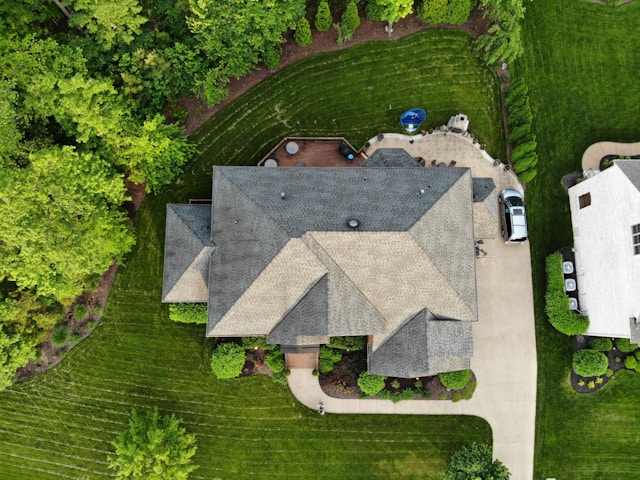
Is it worth investing in a Matterport camera versus relying on phone-based floor plan capture through CubiCasa?
It depends entirely on your market segment. Matterport’s Pro3 camera produces spatial data accurate to within 1% of actual dimensions and generates the most credible 3D walkthroughs currently available at the professional level — which matters for luxury listings, commercial properties, and any property where out-of-state buyers are making offers without a physical visit. The hardware runs roughly $5,000–$6,000 and the subscription model adds ongoing cost. CubiCasa’s phone-based capture is accurate enough for standard residential MLS floor plans and costs a fraction of the investment to deploy. For photographers primarily serving $400,000–$800,000 residential listings, CubiCasa covers the floor plan requirement adequately. For photographers building a luxury or commercial specialty, Matterport’s output justifies the investment because it produces something you can charge significantly more for.
How do I handle the California AB 723 disclosure requirement for AI-edited images, and should I worry about similar laws in other states?
California AB 723 requires real estate brokers and salespersons — not photographers directly — to disclose when advertising images are digitally altered and to provide access to the original unaltered version. Your practical exposure as a photographer comes from contract language with your clients: if you provide AI-edited images without labeling them and the agent uses them in California listings without disclosure, the compliance failure is theirs, but the conversation about what you delivered becomes your problem. The clean solution is building a disclosure-ready workflow: always retain and deliver the unedited original alongside any AI-enhanced version, clearly label which images have been virtually staged or sky-replaced, and include language in your service agreement that agents are responsible for MLS compliance. Other states are watching California’s implementation carefully — this is an area where the regulatory environment will continue evolving, and getting ahead of it now is less disruptive than retrofitting later.
What’s the most effective way to price vertical social media video as an add-on without it feeling like an arbitrary upsell?
Connect the price to the evidence rather than describing it as an add-on. When you present your packages, show agents the 403% inquiry differential between listings with video and those without — that statistic from listing delivery platform data is specific enough to make the conversation concrete. At $200 for a 60-second Reel captured during the same shoot visit, the math is straightforward: if video drives even one additional inquiry that converts to a showing, the agent has recovered the cost many times over. The objection you’ll hear most often is “I don’t know how to use it” — which means the real barrier isn’t price, it’s workflow anxiety. Solve that by delivering the video already formatted for Instagram and TikTok at 1080×1920, trimmed to 45–60 seconds, with a suggested caption and hashtags in a delivery note. Removing the friction at delivery is more persuasive than any price conversation.
With AI editing tools improving rapidly, should I be handling edits in-house or outsourcing to editing services — and does the answer change at different volumes?
Below roughly 15–20 shoots per week, in-house editing with AI-assisted tools like Lightroom’s AI masking, Photoshop’s generative remove, and a sky replacement service is cost-effective and gives you direct quality control. Above that volume, the math shifts. A professional editing service for real estate images — PhotoUp, Outsource Photo Editing, BoxBrownie — runs $1.50–$4.00 per image for standard enhancements, which at 20 images per listing on 20 weekly shoots adds up to $600–$1,600 per week in editing costs. Against that, your time spent editing has a real opportunity cost: every hour editing is an hour not marketing, shooting an additional listing, or building the systems that let you scale. The tipping point where outsourcing wins isn’t a specific volume number — it’s when editing is consistently taking time away from work that generates more revenue per hour than the editing service costs. For most photographers operating at 15+ weekly shoots, that tipping point has already passed.
