
Donec efficitur, ligula ut lacinia
viverra, lorem lacus.
Donec efficitur, ligula ut lacinia
viverra, lorem lacus.
Most newborn photography guides open with poses. This one opens with why some of those poses send babies to the ER if you don’t know what you’re doing — and what to actually do instead. Safety is the real differentiator in this genre. Master it first. Everything else comes after.
Two completely different jobs. Same client, completely different skill set.
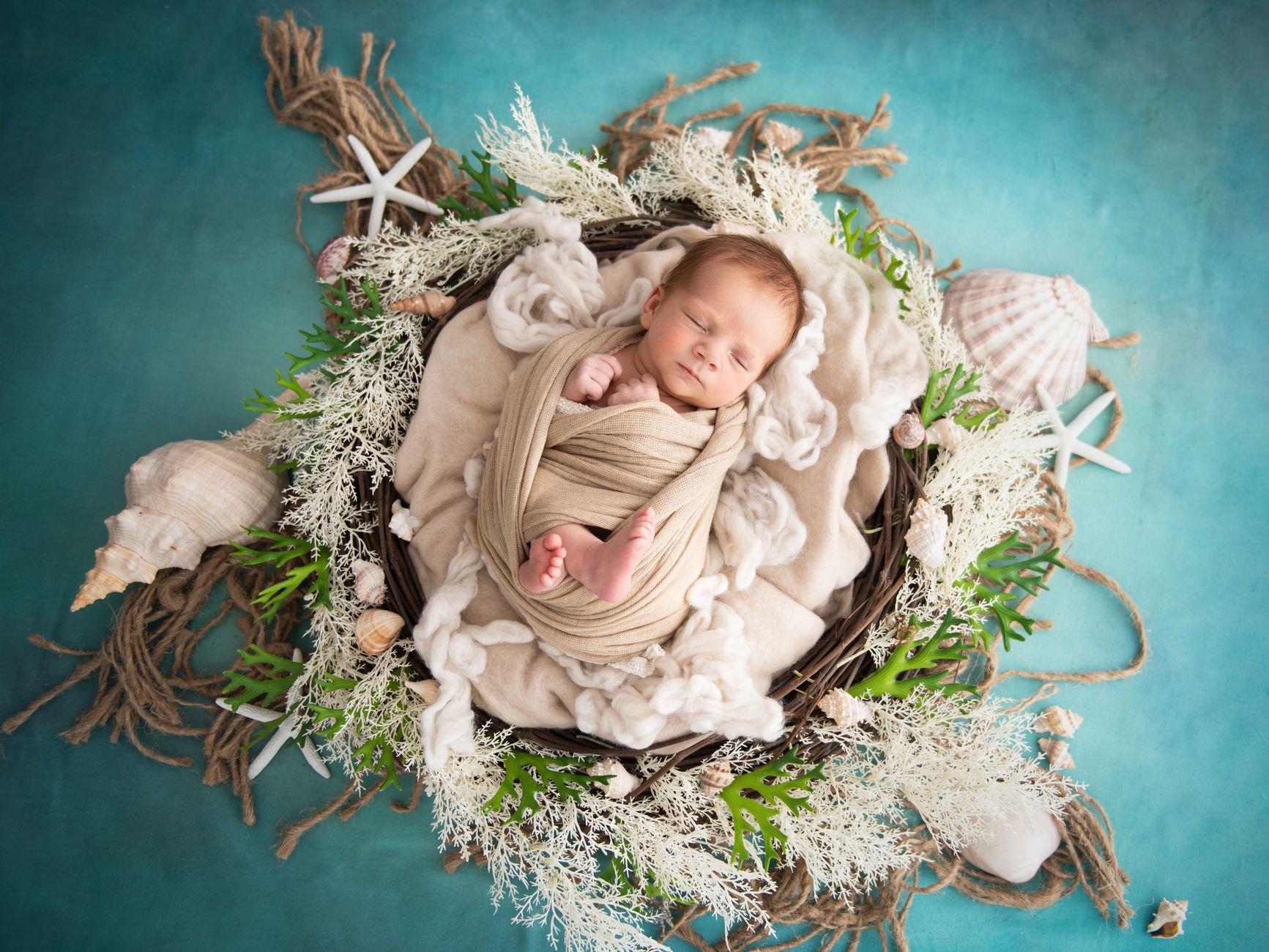
Posed newborn photography means placing a deeply sleeping baby into specific positions on a beanbag, in a basket, curled up in a wrap. You control the light, the props, the posing sequence. Sessions run 3–4 hours. You need to know safety protocols, compositing, and how to handle a baby who decides 45 minutes in that nap time is over.
Lifestyle newborn photography is more documentary. You shoot in the client’s home — baby on mom’s chest, dad’s hands, in the bassinet, during a feed. Less controlled, more authentic. Sessions are 1–2 hours, typically. You don’t need a beanbag or a studio, but you need to read light fast and work before the mood changes.
Neither is better. They’re different offerings with different client bases. Lifestyle attracts parents who want real-life feel over “magazine perfect.” Posed attracts parents who want the full production — the froggy shot, the wrap, the basket, the headband.
Most working photographers end up offering both, or a hybrid where posed work fills the first half and family/lifestyle frames close the session. Worth knowing before you specialize.
5 to 14 days. That’s the window everyone keeps repeating — and they’re right.
At this age, babies still hold the curled posture from the womb. Joints are loose. They sleep deeply and can stay down through most of a 3-hour session. By week three, things shift: babies become more alert, sleep lighter, and the scrunchy newborn look starts to fade. The poses that are comfortable and safe at day 8 can become genuinely difficult for a 3-week-old who’s discovered they have opinions.
After 4 weeks, you can still shoot beautifully — but it’s a different session. Deep curled posing becomes harder to achieve and riskier to attempt without deep sleep. If a family books late and you’re already past 14 days, lean into lifestyle rather than forcing posed work on an alert baby.
Book during pregnancy, target 5–12 days post-birth, build in flexibility. C-sections, early arrivals, jaundice — all of these can shift timing. Families who try to book at 3 days postpartum, sleep-deprived and overwhelmed, are doing it the hard way. Get them locked in during the second trimester.
Here’s what most newborn photography guides get wrong: the froggy pose — the one where baby looks like they’re resting their chin on folded hands — is a composite. Two separate images merged in Photoshop. Baby’s head is supported in one shot, the hand position is captured in another.
Anyone teaching it as a single straight shot is teaching it wrong.
That’s not a minor technical note. It’s the difference between a controlled, spotter-supported situation and a pose that puts real pressure on a newborn’s cervical spine.
Studio temperature. Shoot at 80–85°F (27–29°C). Newborns can’t regulate their own body temperature — they depend entirely on their environment. When they’re cold, they cry. When they’re warm and comfortable, they sleep. Pre-warm the studio for at least 45 minutes before the session. Keep a portable heater near the beanbag throughout. This single adjustment will save you hours of frustration per session.
Head and neck support. A baby at 5 days old cannot support their own head. Until they can, you support it. Always. Any position where the head is momentarily unsupported isn’t a pose — it’s a hazard. Work in a controlled sequence: settle the baby, spotter holds the head while you frame, spotter maintains contact while you shoot.
The spotter role. For any composite or deep curled pose — froggy, taco/womb, potato sack — a second person on set is mandatory. Not a nice-to-have. The spotter’s only job is keeping the baby safe. They are not watching your camera. They are not checking the back of your LCD. Eyes on the baby, full stop.
Listen to the baby. If a baby stiffens, cries, or won’t settle into a pose — drop it. A relaxed baby in a simple side-lying shot is worth more than ten stressed photographers forcing a froggy on a baby who’s clearly not comfortable. The image will show the tension even if you don’t notice it in the moment.
Beanbag placement. On the floor. Always. No stands, no tables.
The lens question comes up constantly, so let’s just answer it directly.
A 50mm f/1.4 covers 80% of what you’ll shoot. Close enough for intimate detail work, wide enough for full-body context, renders beautifully at f/2.0–f/2.8 where you’ll spend most of your time. If you already own a 50mm and you’re wondering whether to buy a different focal length first — you don’t need to.
For dedicated detail work — fingernails, the curl of the ear, heel wrinkles — a macro lens earns its space in the bag. The Canon 100mm f/2.8L Macro or Nikon 105mm f/2.8G VR give you sharp, non-intrusive close-ups without hovering 4 inches from the baby’s face.
A 35mm is the better choice for lifestyle and in-home sessions where you need environmental context. Tight nurseries, parents in frame, the room as background — 35mm handles it without distortion at working distances.
Starting camera settings:
On lighting. A north-facing window is the closest thing to perfect for this genre. Diffuse, consistent throughout the day, soft enough that shadows wrap gently rather than cut hard. Position the beanbag 4–6 feet from the window at roughly 45 degrees — it’s a similar logic to classic portrait lighting placement, where the angle gives you shape without drama.
Direct unshaded sunlight blows highlights and creates contrast that’s too harsh for skin at this age. South or west windows with sheer curtains do the job when north-facing isn’t available. For a deeper look at how light direction and placement shape a portrait — the same principles apply whether you’re shooting a newborn or an adult — our guide on the rule of thirds and compositional decisions covers the underlying thinking.

The froggy pose gets all the attention. It’s also the most technically demanding and highest-risk pose if you don’t know composite editing. So let’s start where you should actually start.
Side-lying. The safest pose in newborn photography. Baby on their side, head supported, knees tucked naturally. Wrap or blanket underneath for warmth and texture. Shoot from above for a bird’s-eye composition, or come in close for a face shot. It’s versatile — and it works with semi-alert babies who won’t go into a deep curl. This is your fallback when everything else isn’t cooperating.
Tushie-up. Baby on their tummy, bum elevated with a rolled wrap or small pillow underneath the hips. Head to one side, hands resting naturally near the face or tucked under. Shoot from above with a clean background underneath. Popular for a reason — the shape reads beautifully from overhead. Keep a spotter close; babies in this position can push up and shift.
Baby in parent hands. One hand supporting the head, one under the body. Father’s hands against a newborn create a scale contrast that’s emotionally compelling every single time — no props required, no complicated setup. Shoot close, focus on the baby’s face, f/1.8 or f/2.0. The background doesn’t matter. This image will be on their wall.
Wrapped shots. A good stretch-jersey wrap covers a lot of posing limitations. Baby wrapped snugly, placed on the beanbag or nestled into a basket, settled naturally. The wrap provides warmth (which keeps them sleeping), creates a clean visual line, and gives you color and texture options. Learn wrapping technique before you learn elaborate poses — it solves more problems.
What about froggy? Come back to it after 15–20 sessions, when you’re comfortable with compositing workflow and confident with a spotter. You need: a deeply sleeping baby, a reliable second person, and the Photoshop skills to blend two source images cleanly around the chin-to-hands connection. That seam is where most froggy composites fall apart.
Posing beanbag. Your workhorse. Minimum 4 feet in diameter — bigger gives you room to work around the baby from different angles. Cover with a stretch fabric that lets the baby nestle slightly into the surface rather than sitting flat on top. Most photographers keep 3 covers: a warm neutral, a cool neutral, a darker textured option. That handles 90% of client preferences.
Wraps. Stretchy jersey or stretchy muslin, 2–3 yards. Avoid stiff or heavily textured fabrics — they don’t wrap cleanly and create pressure points. Muted earth tones and soft neutrals are default-safe choices for clients without strong preferences. Avoid bright primaries unless specifically requested; they make photos feel time-stamped in a way that clients notice when they’re looking at the album 10 years later.
Baskets and bowls. Size is the variable that matters: the baby needs to fit without being compressed. A 10–12 inch interior diameter works for most newborns at 5–10 days. Line heavily with soft fabric before placing baby inside. Never leave a baby unattended in a vessel prop — even with the spotter present.
Headbands and floral pieces. Fine if the client wants them. One or two accent pieces work. A baby covered in overlapping props stops being a photo of a baby and becomes a product photo for Etsy. Oversized headbands also have a habit of slipping during a session and waking up a baby you spent 40 minutes getting to sleep. Your call on whether that’s worth it.
Backdrops. Canvas or fabric for the beanbag area. Solid or subtly textured — nothing with a pattern that competes with the subject. Keep 3–5 neutral options and you’ll cover almost every session.
What you don’t need when you’re starting: elaborate set builds, dried pampas grass arrangements, antique wooden crates, specialty knit cocoons in 14 colors. That gear fills Instagram grids and photographer education feeds. It doesn’t meaningfully improve the session for the family sitting in front of you.

Three-to-four hour sessions exist for a reason. Not every baby cooperates with your schedule. Plan around that reality, not against it.
Feed before posing, not after. A hungry baby will not fall into deep sleep on a beanbag. Coordinate with parents before they arrive — ask them to feed 30–60 minutes before the session start time, or plan a feed in the first 20 minutes of arrival while you warm the studio and prepare props. A full baby is a sleepy baby. Usually.
White noise. Continuous shushing at 65–70 dB — roughly the volume of a running shower — replicates womb acoustics and helps babies cycle into deeper sleep. A hair dryer on low, pointed away from baby, or a dedicated white noise machine. Keep it running throughout. The moment it stops, some babies stir.
Warm hands. Cold hands on a sleeping newborn will wake them immediately. Wash in warm water before posing. If your studio runs cool, keep a hand warmer nearby.
Slow transitions. Moving the baby between poses — beanbag to basket, unwrapping to rewrap — is where most babies wake. Stop, rock gently, wait. Rushing a transition is the most common reason a 45-minute posing sequence gets derailed.
When nothing is working — stop. Take a 15-minute break. Let parents hold and comfort, do a feed if needed, start fresh. Nobody gets a usable image from a baby who’s been crying for 20 minutes while you try one more thing. Step back, reset, try again.
Do sibling shots at the start of the session. Not because you’ll run out of time — though you might — but because a 4-year-old’s patience for a 3-hour photo session peaks somewhere around minute 12.
A workable sequence: open the session with 15–20 minutes of family and sibling shots while the baby is in parent hands or lightly wrapped. Get the interaction — big sister meeting the baby, the look on dad’s face, parents together. These don’t require deep sleep, so use that window while you have it. Then send the older child off with the other parent and move into posed work.
For kids ages 3–6: never place a baby in an older child’s unsupported lap without an adult positioned just outside the frame. The photo should look like the child is holding the baby. In practice, the adult is doing most of the work. That’s not a workaround — it’s standard operating procedure.
Parent shots work best woven through the session rather than blocked into a dedicated slot. Mom holding baby skin-to-skin while you’re transitioning poses? Dad’s hands shot during setup? Those moments are better captured when they happen naturally than when you direct a parent to “look loving” on command.
The same approach applies to wedding and family shoots — building genuine connection into the session instead of manufacturing it. How that plays out in a very different context is covered in our wedding photography guide.
Start with skin. Newborn skin is not smooth — delivery leaves marks, the first weeks bring blotchiness, redness, and flaking. The goal is not a commercial-smooth finish. It’s to even the tone while keeping the texture of real skin. Frequency separation handles this well: separate color from texture, clean the color layer, leave the texture layer alone except for specific blemishes.
On composites. The froggy pose and some deep curled positions require merging two source images. The workflow:
Both source images need the same camera angle, same light, same baby position. Even a slight body shift will produce a seam at the merge. Shoot more frames per layer than you think you need.
Color grading. Two directions that work consistently for newborn work: warm-and-airy (lifted shadows, warm highlights, slight desaturation) and natural-with-depth (fuller shadows, cooler skin tones, more contrast). Pick a direction per session and stay consistent across the delivery. A gallery that mixes warm and cool tones from shot to shot looks like a technical mistake, not a creative choice.
Lightroom presets are a reasonable starting point, not a finishing point. Every session has different ambient light, skin tones, and prop colors — blanket-applying a preset and calling it done produces galleries that feel slightly off in ways clients can’t name but definitely notice.
Current US market ranges:
What to include in client prep documentation — not suggestions, actual requirements:
For questions about booking, session timing, and what’s included in each package — you can reach us directly through the contact page.
When is the best age to schedule a newborn session?
5–14 days after birth is the optimal window. Book the session during the second trimester with a tentative date 5–10 days after the due date. Confirm the exact time once the baby arrives. Don’t wait until after birth to reach out — studios that book consistently are often scheduled weeks out.
Is newborn posing actually safe?
Properly done, yes. The difference is in whether you know what you’re doing: trained technique, a spotter on set for composite poses, appropriate studio temperature, and a working knowledge of which poses require compositing. The poses that look most dramatic in finished images — froggy, suspended shots — are never single captures. They’re always merged from multiple frames where the baby is supported throughout.
What props do I need to get started?
A posing beanbag, 3–4 stretch wraps in neutral colors, 2–3 backdrop options, and a white noise source. That’s the functional minimum. Build from there once you understand what you actually reach for in sessions. Most of the elaborate prop inventories you see on photographer Instagram accounts represent $2,000–$4,000 in purchases — most of it used once.
How many images should clients expect to receive?
A full posed session typically delivers 30–60 edited images. Lifestyle sessions run lighter — 20–35 is common. A curated set of 40 strong images is more useful to a family than 100 mediocre ones. Set the expectation in your client prep materials before the session, not after.
